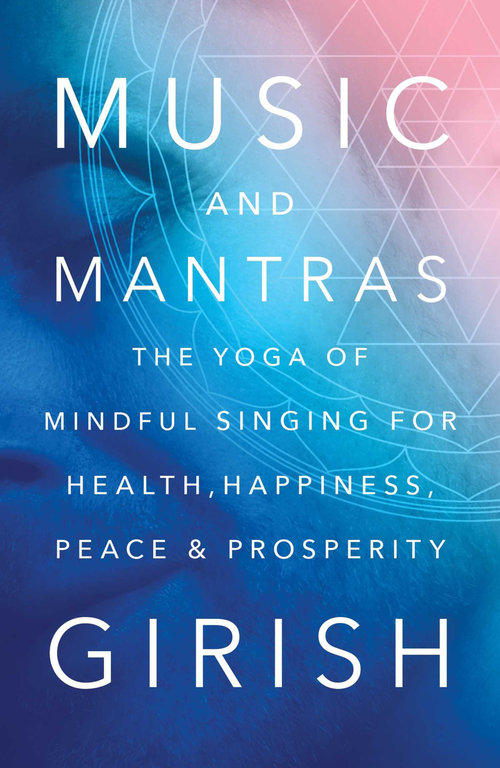
 Girish’s Music and Mantras provides a detailed overview of the history, purpose, and effects of the use of music and mantra in yoga. Broken down into three digestible sections of which Girish beautifully arranged and logically sequenced. The underlying tone and diction used convey a practice that only requires one to “be present – heart and soul” and judgement-free zone (xviii). Girish not only acknowledges, but empathizes with how “singing is the rawest thing” a person can do as it “is a direct, living connection to the deepest parts of who we are.” (xviii, 3).
The first section “Mindful Singing” provides even the most novice practitioner with a guide on how to begin. With details and various exercises to help one find his/her voice, lung capacity, etc., he also provides scientific information and health benefits associated with the act of singing. The second section “Music and Mantras” encapsulates his own personal experience with music and his path to bhakti yoga which naturally leads him to a discussion on neuroplasticity and how singing affects the human brain, to include the healing qualities of the body. He also introduces additional variations, such as mudras and breathwork, to enhance one’s mantra experience, as well as how they relate to the asana practice. He then outlines the three different modes of mantra practice and the three sounds of OM, which I definitely found helpful! He closes the section with advice and exercises to help one establish a regular practice. The final section “Songbook for the Soul” provides a rather thorough summary of each of the 5 main deities and the mantras associated with each of them to include the “translations” and brief mythology associated with each deity.

Photo Credit: Sanjin Kastelan, Croatia Retreat (2018)
Overall, I greatly appreciated how Girish interspersed his own practices throughout the book adding to his “ethos” of authenticity and honesty. This further enabled his giving the reader permission and encouragement towards self-acceptance more empowering. His reminder throughout the book also resonated with me: “all the Deities are simply expressions of Divine qualities already within you.” (159). As stated, his arrangement and sequence of the items discussed were not only logical but extremely accessible for those who may be less experienced, but still provides pertinent details even for those with more experience.
Work Cited:
Girish. Music and Mantras: The Yoga of Mindful Singing for Health, Happiness, Peace, and Prosperity. New York: Atria, 2016.
 Apurva - Yoga with Jenn