
There is definitely a difference between “fixing” and “assisting.” Over the years of practice with various teachers, I have personally experienced both. In some instances, I was taken out of my range of motion and subsequently injured. In other instances, I was taken out of my own head and subsequently discovered something deeper within myself. I have had teachers place their weight on me: standing or lying on my back, wrenching my spine deeper in a twist, tugging on my arm for a bind, or projecting their personal opinions, beliefs, and political agendas. I have had teachers trust me to rely on my own weight: granting me permission to observe without expectations, without judgement; offering verbal and gentle tactile cues to enhance my awareness.
My initial teacher training focused on Ashtanga with an emphasis on adjustments:
ad·just·ment /əˈjəstmənt/ noun: a small alteration or movement made to achieve a desired fit, appearance, or result.
https://www.lexico.com/en/definition/adjustment
While there are many yoga practices that focus on alignment, I have found verbal cues to be most effective in ensuring student safety during an asana practice. Forced adjustments seek to “fix” a posture for ultimate physical benefits and aesthetic purposes. However, I have found over my years of teaching and practicing, that not every posture is for every body. My first teacher would state that we all have “issues in our tissues”, thus making certain postures difficult for some people. Over time, I have learned my limitations and am working to accept rather than fight against them. So for me, “fixing” implies that something is wrong, whereas “assisting” implies guidance and empathy.
In Levine’s Waking the Tiger, “Traumatic symptoms . . . stem from the frozen residue of energy that has not been resolved and discharged; this residue remains trapped in the nervous system where it can wreak havoc on our bodies and spirits.” (19). According to Levine, I suffer from Developmental Trauma. Through the many years of practice, I have learned a lot about myself as the “decades”, maybe “lifetimes”, of suppression and these conditioned patterns surfaced in my practice – my fear of inversions, my difficulty with backbends, a general distrust of my intuition, and even the fear of my voice – all spilled out and exposed on my mat (149). According to Pema Chodron in Start Where You Are, “We come to have a sense of letting our experience be as it is without trying to manipulate it, push it away, or grasp it.” (7) It is less about “fixing” and more about “assisting” towards acceptance. Through the continued practice and training, yoga has become a “transformative” way of life for me (Levine, 1), an opportunity to “. . . letting our experience be as it is without trying to manipulate it, push it away, or grasp it.” (Chodron, 7).

Through assists, I began to identify with the ebb and flow of sensations as “compressed energy” that I have held onto for so many years as they were revealed in my practice (Levine, 76). “Acting out and repressing are the main ways that we shield our hearts, the main ways that we never really connect with our vulnerability, our compassion, our sense of the open, fresh dimension of our being. By acting out or repressing we invite suffering, bewilderment, or confusion to intensify.” (Chodron, 31). I recall struggling through various asanas in the very beginning, being ego-driven to simply accomplish the posture in the basest physical form. However, “. . . compassion starts with making friends with ourselves, and particularly with our poisons – the messy areas.” (33. 46). Years later, as Pema states, “the first step is to develop compassion for our own wounds,” I was able to connect these sensations with the developmental trauma of my childhood (Preface).
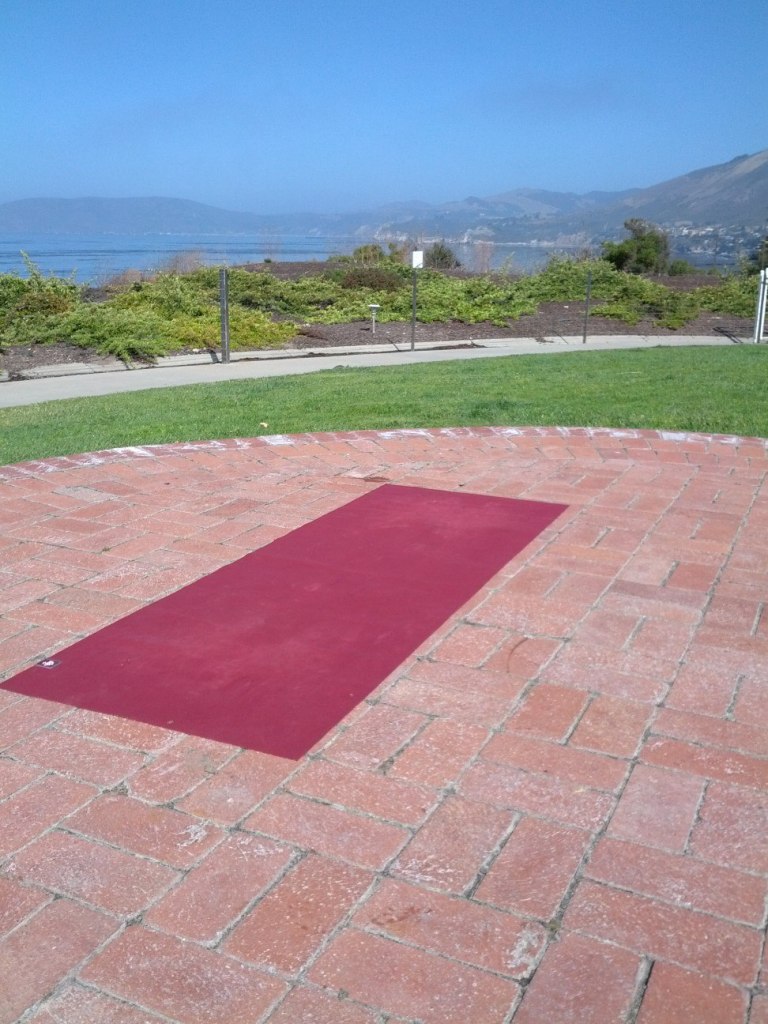
Almost every time I come to my mat, something new is revealed; under the right guidance, an inner freedom is opened or released in the form of an inversion, a back bend, or even singing. It is through these experiences that I also became aware of how my sense of self is heavily based on past experiences and how new information has filtered through that previously determined sense of self (Levine, 121). My practice evolved to “The moving away from comfort and security, is stepping out into what is unknown, uncharted, and shaky – that’s called enlightenment.” (Chodrom, 18). Indeed, yoga has become my adaptive process allowing for the gradual renegotiation of the “sheaths of memory” relating to the traumas of my lifetime, and quite possibly the traumas of lifetimes before, and “What you do for yourself, you do for others, and what you do for others, you’re doing for yourself” (33). This is part of the practice that I attempt to share when I teach, for “If we enjoy what we are experiencing, to think of other people and wish for them to feel that.” (7). By developing unconditional compassion for myself “leads naturally to unconditional compassion for others.” (Preface). Afterall, “If you can know it in yourself, you can know it in everyone.” (37).

As a teacher, I have to be in the right space – mentally, physically, energetically, and spiritually before teaching a class, especially when offering assists in a class. Every class must begin with moments of stillness, not only for my students, but also for myself. I have to ground myself, calm my mind, and set my intention for the class, and I guide students to do the same. Through the breath, I am able to bring myself to the present moment, to “Be right there with the breath as it goes out,” is the same thing as saying, “Be fully present.” (Chodron, 5). As it has been my own personal experience, it is my belief that each person has the ability to connect to his/her intuitive nature if given the opportunity and the space to do so, “You can give something that will help someone else connect with their own insight and courage and gentleness, rather than further polarize the situation.” (102). These assists come in the form of verbal and tactile cues: creating more awareness of one’s mind and body at the present moment with compassion and acceptance. As Chodron states,
Buddha is our inherent nature – our buddha nature – and what that means is that if you’re going to grow up fully, the way that it happens is that you begin to connect with the intelligence that you already have.
Chodron, 98
Works Cited:
Chodron, Pema. Start Where You Are: A Guide to Compassionate Living. Shambhala: Boston, 2011.
Levine, Peter A. Waking the Tiger: Healing Trauma. North Atlantic Books: Berkeley, 1997.
 Apurva - Yoga with Jenn