
Having practiced with Janet since 2011 and training with her since 2016, I am familiar with her style and approach. Through various classes, trainings, and retreats, my appreciation of “slowing down” has been enhanced. In the beginning, I was like Kartikeya – fierce and intense not only in my practice but also in my everyday life. Since more formal training with Janet, I have become more like Ganesh – calm, patient, and content both on and off my mat.
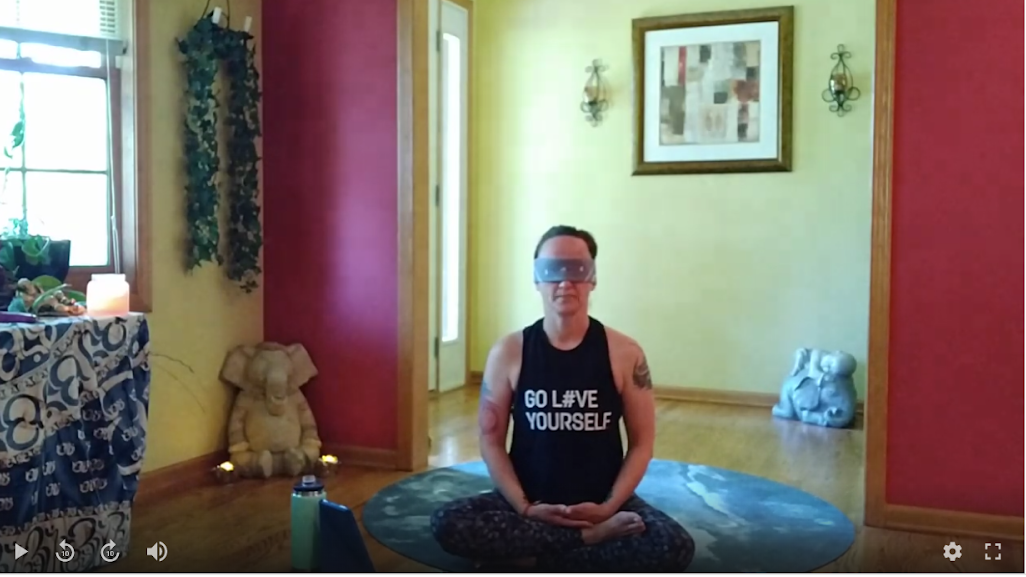 One of the things that really resonated with me in this course were the opportunities to disengage visually. Similarly to the use of blindfolds in her Art of Assisting (specifically Module 3: Foundations and Connections), Janet employed the use of eye pillows and “tenting” in restorative postures. The practice becomes very different without the aid of visual stimulation during the more active and energetic asanas, as well as in the less active, restorative asanas. For me, disengaging the visual heightens my other senses of awareness.
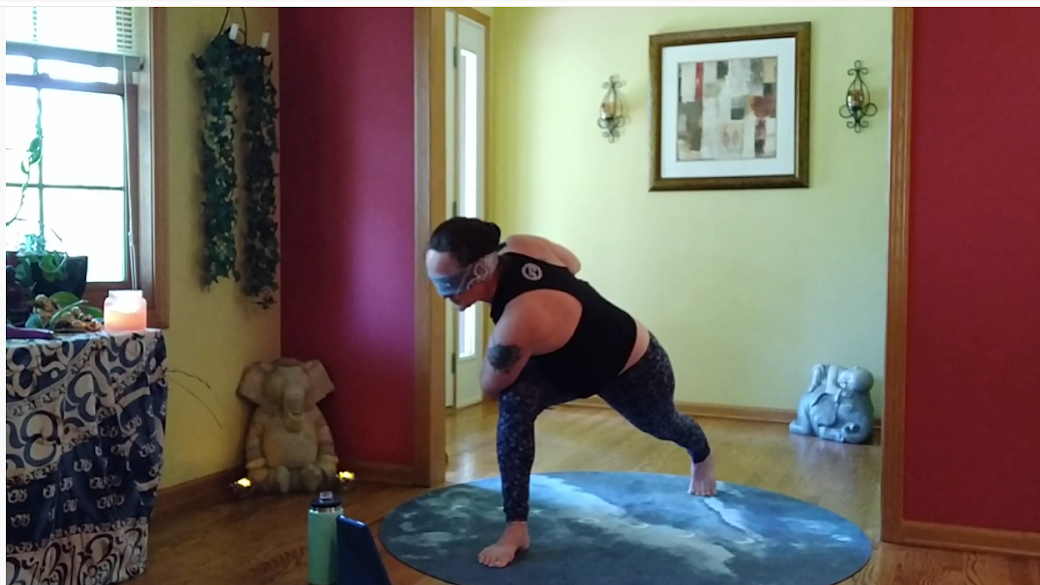 During my initial 200-hour yoga teacher training with Jonny Kest back in 2011, I was introduced to his concept of Slow Flow: a grounding practice utilizing the complete yogi breath in a darkened room, without vinyasas or balance postures, and music without lyrics; a practice in which one should be able to complete blindfolded. As part of our training, we were given an opportunity to practice blindfolded. Once placing the blindfold over my eyes, I recall an immediate sense of panic evident in my heart rate and breath. I was very clumsy and distrustful during the beginning of the practice, but once I was able to set aside my fear and reservations, an entirely new practice opened up to me – one that was more sensual and intuitive. I had to slow down and utilize my other senses: listening carefully to his cues and the breathwork of those around me, focusing on my own breath and my connection with the earth, feeling my heartbeat and the sweat on my skin.
 Since this class with Jonny, I have refrained from using my eyeglasses during my practice – visual aids that have become necessary in my everyday life due to excessive use of my eyes over the years; I also frequently close my eyes throughout my practice. For me, closing the eyes is the ultimate level of self-acceptance and self-trust. After a few injuries, I have become more mindful in my practice and welcome the opportunity to slow down and give myself permission to rest when needed – or as Max Strom states, “Warrior 4.” Through Janet’s trainings, I have come to enjoy the benefits to my nervous system, giving myself permission to rest when needed, expanding my proprioception, and truly connecting with my breath. In my own teachings, I encourage students to elevate their practice by doing the same – to slow down, to pause, to notice, and to bring their gaze inward. I have also led monthly blindfolded sessions per students’ request.

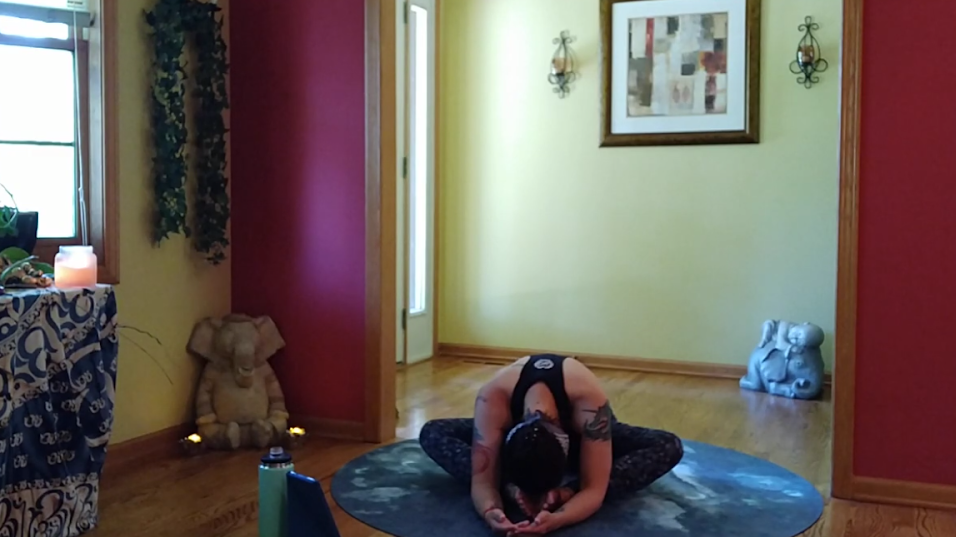
This unprecedented time is like a dramatic pause; in literary terms, it is defined as a beat or two of silence that is usually done to heighten the anticipation before the big reveal. The global COVID-19 pandemic has been a much-needed “dramatic pause” in my life; my being “busy” 70+ hours a week decreased to 25+ hours a week. During this time, I was forced to embrace the opportunity to slow down, to sink in, to marinate, to relax, to simply “be” – so this course was perfectly attuned to this surreal time. Having most of the props available in my own practice space, I was able to lean into the support offered, even if awkward at the beginning. Now, I use blocks more often in my practice – especially under my shoulders when prone, or under my tailbone, mid-back, base of skull, or the ankles when supine. As with the assisting training, I have had to experiment with my own body – which has enabled me to not only identify, but to address my own areas of need. This “dramatic pause” has been healing and nourishing for me as I gradually began to accept and connect to subtlety while allowing myself to be held in blissful, and rest. On or off the mat, when we give ourselves an opportunity to pause, to notice, and to feel, we discover something deep within ourselves.
I was also pleased to revisit the student-teacher mantra first introduced to me recently while in India by Shiva Kumar:
“Oṃ saha nāv avatu
saha nau bhunaktu
saha vīryaṃ karavāvahai
tejasvi nāv adhītam astu
mā vidviṣāvahai
Om śhānti śhānti śhāntiḥi”
Aum! May we two be protected together. May we be nourished together. May we work together with heroic vigor. May our study together be filled with light. May there never be enmity between us. May it be so. Peace, peace, peace on all levels.
Photo Credit: Paula Subler
I look forward to sharing this mantra when in-person classes resume. However, our world as teachers may never be the same – I’m not sure how assists and the restorative asanas will be accessible with the limitations on hands-on assists, the usage and sharing of props. Like the Assist training, I will welcome it as an opportunity to slow down, to be creative, to be open, and to be accepting of the what is, as it is – known, unknown, and within.
Oṃ 🙏
 Apurva - Yoga with Jenn