Archive for December, 2021

Awaking Shakti

Posted: December 30, 2021 in Book Reviews

Sally Kempton’s Awakening Shakti: The Transformative Power of the Goddesses of Yoga serves to provide a deeper understanding of and appreciation for the various goddesses associated with Tantric Narrative. While familiar with each of the goddesses covered due to the dharma talks during various trainings with Janet, this text not only elaborated on those teachings but also illuminated each goddess in form and function. 

With each chapter dedicated to a goddess, Kempton details the stories associated with her, how to approach the goddess, how to ask for help, how the goddess is revealed, characteristics of the goddess (including the shadow side), and concludes with mantras. What was particularly illuminating was Kempton’s application of the goddess in everyday life involving ordinary people; thus bringing into view each goddess through a contemporary lens that offers a very modern and realistic perspective. In fact, on numerous occasions while reading, I found myself reflecting on situations and events that revealed my own connections with each deity. 

Kempton’s description of a cartoon she had seen in the New Yorker featuring Durga made me laugh, but on the other hand, it also really resonated with me. I had to find it!
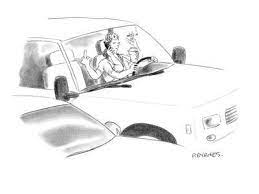
As a mother and retired educator, the personality of Durga is evident in me, “When you feel drawn to this goddess, it usually indicates one of two things: either you need an infusion of Durga-like strength, or you carry the Durga archetype as part of your personality . . . .  warrior-style leadership.” (68). Juggling a high pressure job and domestic life, I was the epitome of a multi-tasker (oftentimes to my own detriment). By day, I was a high school teacher with 2-3 different courses to plan, teaching 5-6 periods a day, and attempting to empower classrooms full of struggling, impoverished adolescents. By night, I was a mother and wife – two roles of which I am very protective. The shadow side of Durga is her need for “control to the level of micromanagement”, but this applies only to myself as it manifests in my OCD as a result of the “relentless inner critic” highlighting every one of my faults and flaws (72). According to Kempton, “[o]ne way to get a felt sense of the Durga Shakti is to remember a moment when you recognized, from the deepest place inside of you, that something was wrong, that it had to change.” (73). This moment for me was when my son was 2-years old: my father had passed from Non Hodgkin’s Lymphoma associated with Agent Orange exposure in Vietnam; my mother was undergoing chemotherapy for breast cancer; and my son had entered the “terrible twos”. As a result of a particular moment when my frustrations and anger were beyond my control, I saw myself turning into my mother. It scared me. I had to make a change. Thus, I found refuge in a local yoga studio and discovered a path towards revealing and healing.

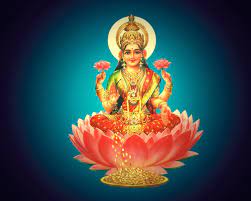
Lakshmi’s qualities of “generosity, loving-kindness, carefulness, unselfishness, gratitude . . . discipline, cleanliness, and order” also resonate with me to the point of imbalance (106-107). I will often make sacrifices for others to the detriment of my own time, resources, energy, etc. However, since retiring from public education, I’ve been able to find more balance in my daily life (to include keeping a tighter budget). While reading the chapter on Lakshmi, I took pause, “In India, the yearly Lakshmi festival begins with a thorough house cleaning. Everything in the house is scrubbed and polished, and only when the dust and first have been removed is the household considered ready to welcome Lakshmi.” (109). Before reading this particular chapter, I had taken advantage of my husband, son, and dog being gone for a week; to create balance, I focused on deep cleaning and polishing one room of the house at a time over the course of the week. Coincidence? Or prophetic?
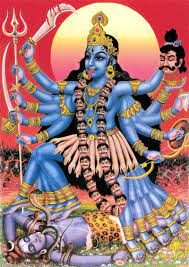
Kempton’s exercise “Dialoguing with Kali” outlines writing down questions for Kali with your dominant hand (for me, right) and then writing the answers with your nondominant hand. This immediately reminded me of a similar application to my own practice. Over the past few years, Ida and Pingala nadis have really transformed my practice and my teachings. I began with longer holds on the left side during yin and restorative classes; and a couple of weeks ago, I began my cueing the left side first as opposed to the right – much to the confusion of all. Kali also surfaced in a recent event at a local Starbucks. After a yoga class, a long time friend and I decided to stop for a coffee. While we were conversing and regaling in laughter, another patron began yelling at us, “Can you quiet down. No one here is interested.” Kali’s fire indeed, “[Sometimes] the way through Kali’s fire is utter surrender . . . sometimes, it’s quite simply our ability to love her even in her terrible form.” (140). While my friend wanted to yell back, I discouraged him by simply saying, “The holidays are tough for some people.” 
In Part One: Receiving the Energy of Parvati, I was reminded of a memorable moment during aarti at our New Year’s Eve Puja in India that, even now, brings tears to my eyes. After a round of Bhakti, Janet circulated to perform tilaka (the application of the kumkum powder). When she knelt down before me, and our eyes met, I was overcome with emotion, “Parvati’s strong and tender love-light now illuminates your heart, purifying it of wounds and blocks, dispelling the armor that you’ve erected around it. As your heart opens and releases its blocks, tears might come. Let them flow.” (162). During this dramatic pause in time and space, I acknowledged the divineness that resides deep within her as well as within myself.
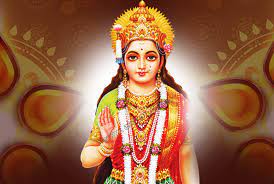
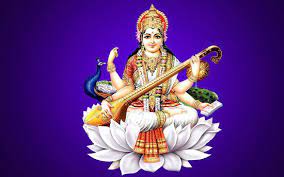
According to Kempton, “[w]hen words flow easily, when ideas come up out of nowhere, when you say something so powerful and profound that it surprises even you, you are experiencing Saraswati” (178). This happens often as I guide classes to create sacred space by which to begin or to end one’s practice. The wealth of knowledge I have gained since beginning my training with Janet has been held, permeated my heart and mind to the point that it has become a part of me and has led me to express things in my own words in unique ways (187). I have experienced her “creative flow through language, speech, and sound” on numerous occasions, particularly in mantra or Bhakti (179). Singing has always come naturally to me. I remember the first class I ever took with Janet at the Midwest Yoga Conference; I never felt more alive and empowered through the Bhakti she offered. Like Saraswati, I enjoy “solving intellectual and artistic problems, discovering connections and new paradigms” (179). As a public educator, students always were amazed at how I was able to empower them by asking “the right question – the question that elicits a new way of thinking or a different way to look at a problem.” (180). Like Saraswati, I am “a proof-reader, a timekeeper, a perfectionist.” (191). I also connect with her in what Kempton states is “arousal from below.” (195).  All through college, writing was the “process of regurgitating it onto paper, resisting the urge to edit . . . Later to . . . sculpt the mess of words” into a well-written essay (192). After all the writing and research, the moment I walked away, the inspiration arrives (195). As for her shadow side, this too rings true for me as “negative self-talk all linger in the heart . . . the brain is wired to remember the negative much more easily than the positive.” (182). But I am continuing the work necessary to change the narrative. 
While additional deities were also included in this text, the foregoing were the ones that truly resonated with me in one way or another. I would definitely recommend it to those interested in delving deeper into Tantra.

Work Cited:

Kempton, Sally. Awakening Shakti: The Transformative Power of the Goddesses of Yoga. Sounds True, 2013.
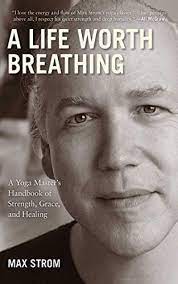
A Life Worth Breathing

Posted: December 30, 2021 in Book Reviews

I met Max Strom at the Midwest Yoga Conference back in 2011. He has a presence that is very grounding yet light hearted at the same time. In this particular pranayama workshop, I discovered new ways of breathing. I distinctly recall his guiding us through bahih and antah kumbhaka pranayama, and I was amazed with how air compresses in the lungs. After the workshop, I had gained a renewed sense of awareness.

Strom’s book, A Life Worth Breathing: A Yoga Master’s Handbook of Strength, Grace, and Healing is very thorough and details how mindful breathing, along with the physical practice of yoga and meditation, can elevate our awareness. He begins by drawing the reader’s attention to the power of intention, “May we be a breath of life to the body of humankind” (28) thus eliminating the existence of duality and reminding the reader that we are not separate entities but part of a greater whole. He then warns against the ego-mind as being a “prisoner of itself” that is rooted in fear that reacts rather than acts to the unknown and aversions (29-30). However, through humility, “[t]his “not knowing” allows space for true knowing” – “the higher function of the heart within the heart” (36). Using the analogy of a magnifying glass, it is the power of self-discipline that magnifies and burns away obstacles and leads to personal transformation (36-37).

Strom then details the three pillars: Mind, Emotions, and Body. As if awakening from a dream, breath work is like turning on a light from the dark recesses of our inner being (47). When synced with movement, one is able to slow down the thoughts and to dissolve the ego-mind. To feel the energy within opens one’s heart and feelings of immense love, thus illuminating the darkness within (48). The same holds true with meditation which leads one to “remember and have access to wisdom long buried” as the chatter of the mind quiets and the heart opens (52). Pranayama practice also serves to “harmonize” the somatic, autonomic, and sympathetic nervous systems (53-54).

The second pillar, Emotions, Strom reminds the reader that “while circumstances are often beyond our control, our emotions are our own. The practice of choosing your state of mind is the beginning of happiness.” (60). In fact, one’s reactions are a reflection of one’s own emotions, particularly with regards to the feelings of intolerance and anger (68). Strom’s words “ When we grant mercy to others, we grant mercy to ourselves.” (75) in particular resonated with me; having forgiven my abuser, I was more at peace and able to move on from adolescence into adulthood; I was also able to find gratitude knowing that I was on the other side of the darkness and in those times of turmoil, I discovered my inner strength and courage. Indeed, gratitude is the parent of all virtues: 

Within your gratitude is one of your greatest powers, for only when you find gratitude do you begin to be liberated. Gratitude humbles you, and the humility enables you to forgive. Forgiveness gives birth to sympathy and love itself, and in love we are liberated . . . let us remember our most profound gratitude, and forgive those who have forgotten theirs.”

(Strom, 84)

With regards to the third Pillar, the Body, residuals of my developmental trauma and losses are still evident in my physical practice, “opening the chest is the hardest part of one’s yoga practice because it is in the chest that we keep our grief and our old memories” (106). I recognize these residuals and offer them love and compassion without any judgment. I release it even if it’s only for that breath, for each subsequent release becomes a little easier. This is the part of the practice that extends beyond my yoga mat; I find myself doing the same inner practice throughout my day. As a result, I have become “more at ease, storing less negative anxiety and tension” (123). I’ve also noted that calmer people and places resonate with me, thus indicating a more harmonized nervous system (125).

Strom then outlines where we hold emotions in the body as well as the asanas that will address those areas, followed by advice on how to get started. The complete integration of the pillars is through the breath, “[t]he highest Self sets your intention through the mind. The breath transmits your intention into every cell of your body.” (148). He then suggests a code of conduct, referred to as the “Five Causes” to practice: gratitude, forgiveness, kindness and honesty, humility, and ethics (154-155). He concludes with principles of action that remind the reader of how one’s self-awareness also affects one’s external-awareness by addressing conscience, awareness of time, competition and power, money, and activism without anger. Indeed, “Nearly all of the world’s external problems are symptoms of internal problems, inside of you and me.” (191). Now more than ever, “we need to take our principles of living beyond ourselves to help others on their path, whether individually or collective.”

Work Cited:
Strom, Max. A Life Worth Breathing: A Yoga Master’s Handbook of Strength, Grace, and Healing. Skyhorse, 2012.

Polishing the Mirror

Posted: December 30, 2021 in Book Reviews

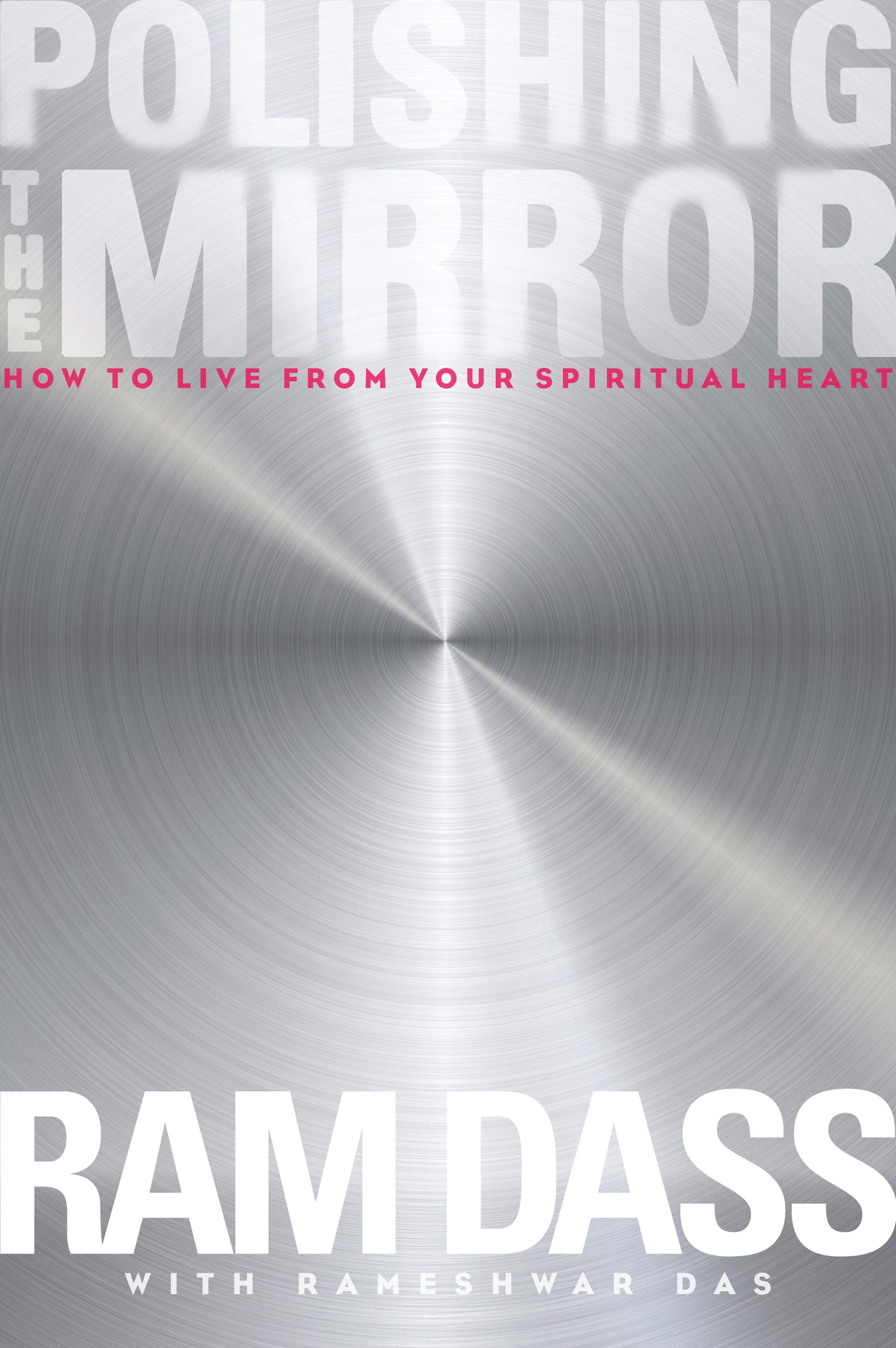
Ram Dass’ Polishing the Mirror: How to Live from your Spiritual Heart is a personal narrative and instruction manual for those interested in deepening their practice on a spiritual level. Through the use of personal narrative, Dass uses a combination of insight, humor, stories, and guidance from his own practices to illuminate a deeper level of consciousness: “The spiritual journey is not about acquiring something outside of yourself. Rather, you are penetrating the layers and veils to return to the deepest truth of your own being.” (6). By sharing his own journey of “polishing the mirror”, he reveals how  one’s authentic being is deeply seated within one’s heart: “Consciousness itself is a hall of mirrors. The key quality of the human soul is the ability to reflect on its own existence. Self-reflection, introspection, self-inquiry – whatever we call it – takes us through many layers of the onions of our inner being, . . . “ (170).

According to Dass, “Bhakti is the path of the spiritual heart, using our human emotions to forge the connection between the human and the divine.” (13). He also emphasizes love is a state of being: “. . . love isn’t possessive. We can’t collect it. We can only become it” (16), and these teachings can be found anywhere, “You don’t have to rush off to India, because the guru and the teaching are always right where you are, right here, right now.” (20). It is a process that requires our faith to reveal “the impurities and imperfections of our individuality that keep us from becoming one” (22). Additionally, karma is our dharma, “As a conscious being, you do all you can to live in your soul and to create space for others to be in their soul too.” (34). This requires our bearing witness as a neutral observer to our own attachments. According to Dass, “everything we notice in the universe is a reflection of our attachments.” (36). Thus, “living a spiritual life is a strategy for working on yourself for the benefit of all beings.” (44). This witnessing of our feelings and emotions allows us to simply observe, acknowledge, permit it to be, so we can eventually release them. In turn, “you also become a mirror for others to find their souls.” (119).

The account of “hanging out with blue Krishna and driving [slowly] along the New York Thruway” in a black limousine converted into a camper was hilarious.  The image of Dass with one hand on the wheel and mala beads in the other while singing to Krishna had to have been a sight to the state trooper who eventually pulled him over. The inner monologue of Dass, “Wouldn’t Krishna come as a state trooper? Christ came as a carpenter” makes one consider the possibility of the divine in all living beings (57).

Dass continues his narrative reflecting on the aging and dealing with change, “Old age trains you for change – change in your body, change in memory, chance in your relationships, change in energy, chance in your family and social role – all leading to death” (65). I, myself, have noticed these gradual changes with each passing year. Now at the age of 51, my priorities have changed, my circle of friends has grown smaller, and I am more committed to my yoga practice on and off my mat. Maybe I have become “irrelevant” for some, but it has given me more time to do inner work and to shift from “doing” to “being” (73).

His chapters dealing with death and dying really resonated with me. I am no stranger to hospitals, acute care facilities, and nursing homes. I have even assisted in hospice care for quite a few friends and relatives. As Dass recounts, I, too, have witnessed the “deception” given to those who are dying and to the caretakers as a means of easing the fear, guilt, pain and suffering (85). Personally, I was honored to be present for the transition of an uncle, my husband’s grandfather, my father, my mother, and my beloved felines, Smokey and Bandit. It is the ultimate offering one can give by being present and giving permission to let go; it is the “most exquisite manifestation of service” (89).

Dass’ description of dying reminded me of a collection of poems written by Emily Dickenson that explored death and dying. One in particular explores the senses and how they become confused and blended (synesthesia): 

I heard a Fly buzz – when I died –
The Stillness in the Room
Was like the Stillness in the Air –
Between the Heaves of Storm –

The Eyes around – had wrung them dry –
And Breaths were gathering firm
For that last Onset – when the King
Be witnessed – in the Room –

I willed my Keepsakes – Signed away
What portion of me be
Assignable – and then it was
There interposed a Fly –

With Blue – uncertain – stumbling Buzz –
Between the light – and me –
And then the Windows failed – and then
I could not see to see –

The last stanza reveals the synesthesia of the senses: “blue” being a color that is seen; “stumbling” being a sensation that is felt; “buzz” being a sound that is heard. Dass’s description of dying reveals a process associated with the elements: “As the earth element leaves, your body will feel heavy. As the water element leaves, you will feel dryness. As the fire element leaves, you may feel cold. As the air element leaves, your out-breath will be longer than your in-breath. The signs are now here. Don’t get lost in the details. Let your awareness go free.” (91).

With death comes suffering. Recounting the 4-Noble Truths of Buddhism, Dass emphasizes that attachments are the “clinging of mind – to attractions and aversions” that create a false sense of the self.  To demonstrate how suffering can be eased, Dass uses his suffering from a stroke as an example: “identify with being a witness of pain. Physical pain is in the body, and I am not my body.” (102). By shifting our perspective about suffering, it can be viewed as a “fire that purifies” or possibly “the teaching you need in the moment.” (108). It is through these experiences that we can become compassion: “You don’t have compassion – you are compassion. True compassion goes beyond empathy to being with the experience of another.” (109). 

Despite the passing of various loved ones, the one that hit me the most was the passing of my dearly beloved father. He was the epitome of unconditional love and compassion. Throughout my life, he was always there for me; he encouraged me in ways that my mother did not; he loved me in ways that my mother was unable to. What made his passing particularly difficult was the fact that my son, then 2 years of age, would grow up without truly knowing him.  As a means to cope with his passing, I came across a Sushila Blackman’s book titled Graceful Exits: How Great Beings Die; reading through this compilation of death stories from Hindu, Tibetan, Buddhist, and Zen masters, I found some reassurance and solace in the loss. After reading this particular chapter in Polishing the Mirror, I was reminded of Ramana Maharshi from our visit to the Sri Ramanasramam in Thiruvannamalai, India; I consulted Graceful Exits to find an account of his passing: 

The end came on April 14, 1950. That evening the sage gave darshan to all the devotees in the ashram. They sat singing Ramana’s hymn to Arunacala, the name of the holy mountain the sage so loved. He asked his attendants to help him sit up, and opened his luminous and gracious eyes for a brief while. There was a smile, a tear of bliss trickled down from the outer corner of one of his eyes, and at 8:47 pm his breathing stopped. There was no struggle, no spasm, none of the signs of death. At that very moment, a comet moved slowly across the sky, passed over the summit of the holy hill, Arunacala, and disappeared behind it.

(Blackman, 56).
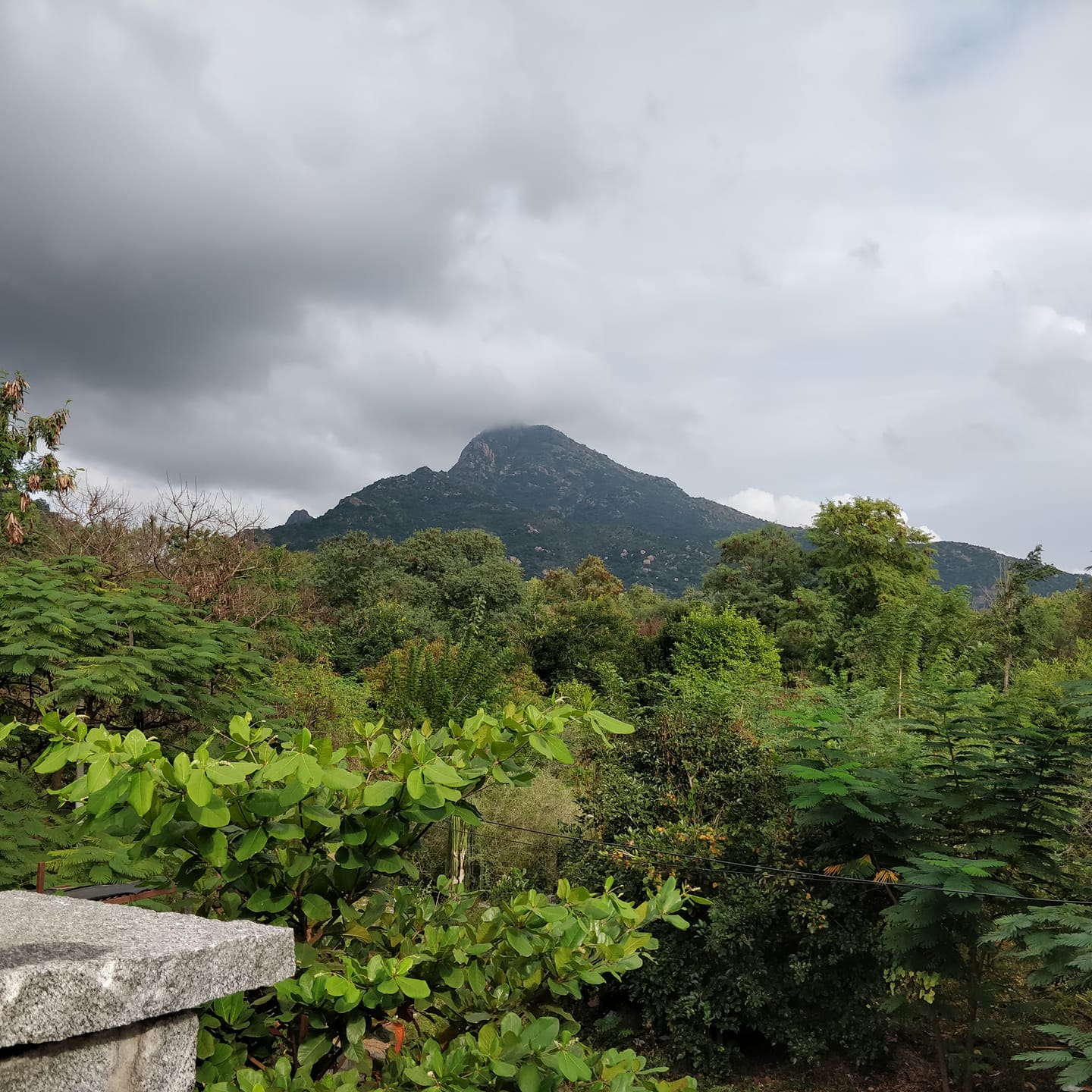
Mt. Arunachala is one of the five main shaivite holy places in South India.
— in Tiruvannamalai.

Indeed, Sri Ramanasramam demonstrated supreme compassion not only towards others, but especially towards himself. In his own words, “There is no need for alarm. The body is itself a disease. Let it have its natural way.” 

Dass concludes his narrative with various forms in which to “polish one’s own mirror” through practicing daily mediation, honoring silence, expressing gratitude, participating in Kirtan, recognizing realized beings, and listening to one’s intuition.

Works Cited:

Blackman, Sushila. Graceful Exits: How Great Beings Die. Shambala, 2005.

Dass, Ram. Polishing the Mirror: How to Live from Your Spiritual Heart. Sounds True, 2014.

Dickinson, Emily. “I heard a Fly buss – when I died -” (591). Poetry Foundation.