Archive for the ‘YTT Reflections’ Category

Final Reflection

Posted: January 19, 2022 in YTT Reflections

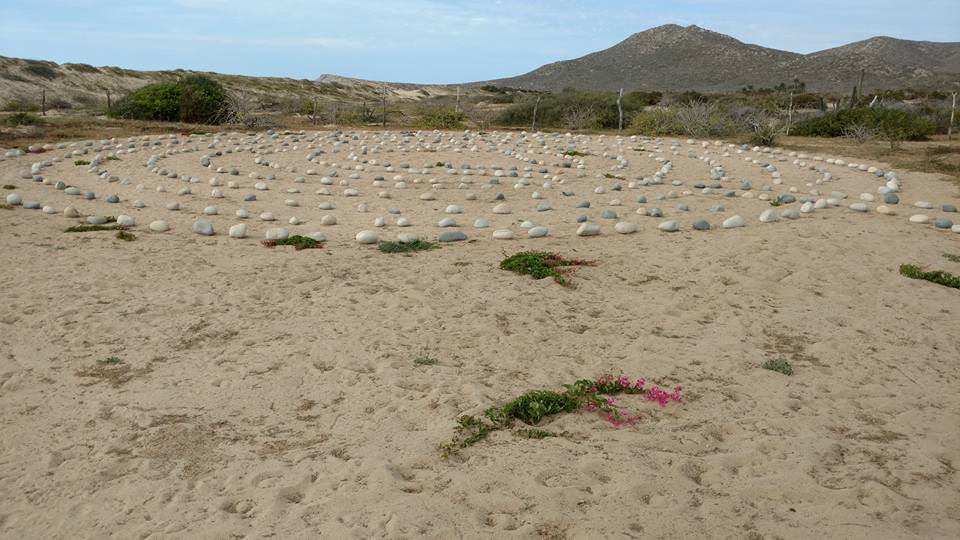
This 300-hour yoga teacher training began at the Santosha retreat in Mexico in 2016; reflecting on the past 5+ years is a daunting task as so much has occurred and so much has been learned. The past 4+ years are a blur courtesy of my previous profession entailing 70+ hour work week, thus only having the time and energy to tend to the coursework over winter and summer breaks, as well as extended weekends. Despite these limitations, I am grateful for these pauses as they provided me the time necessary to truly allow the various trainings to marinate and manifest in my own practice.

Santosha Retreat, November 28, 2016
Cabo San Lucas, Mexico

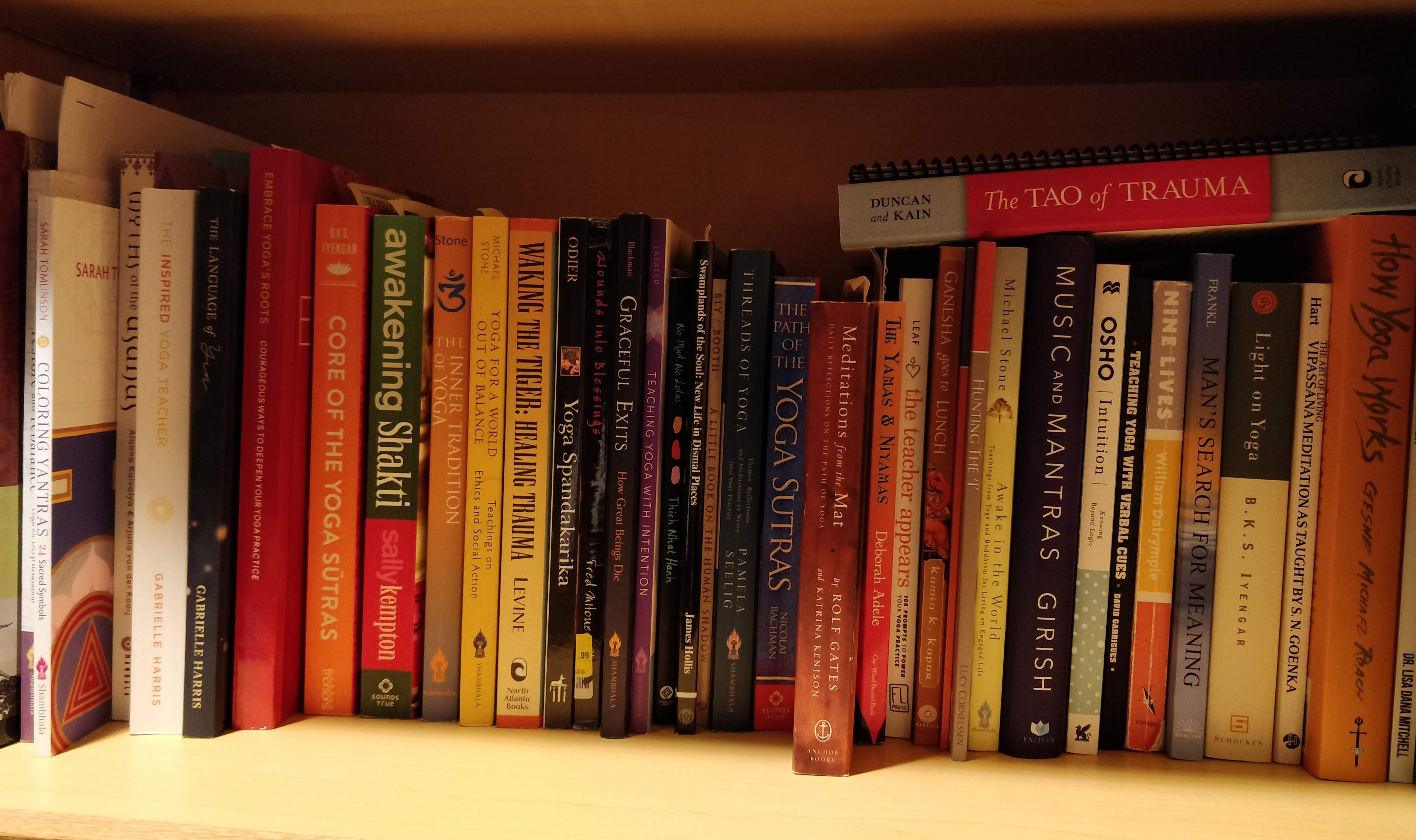
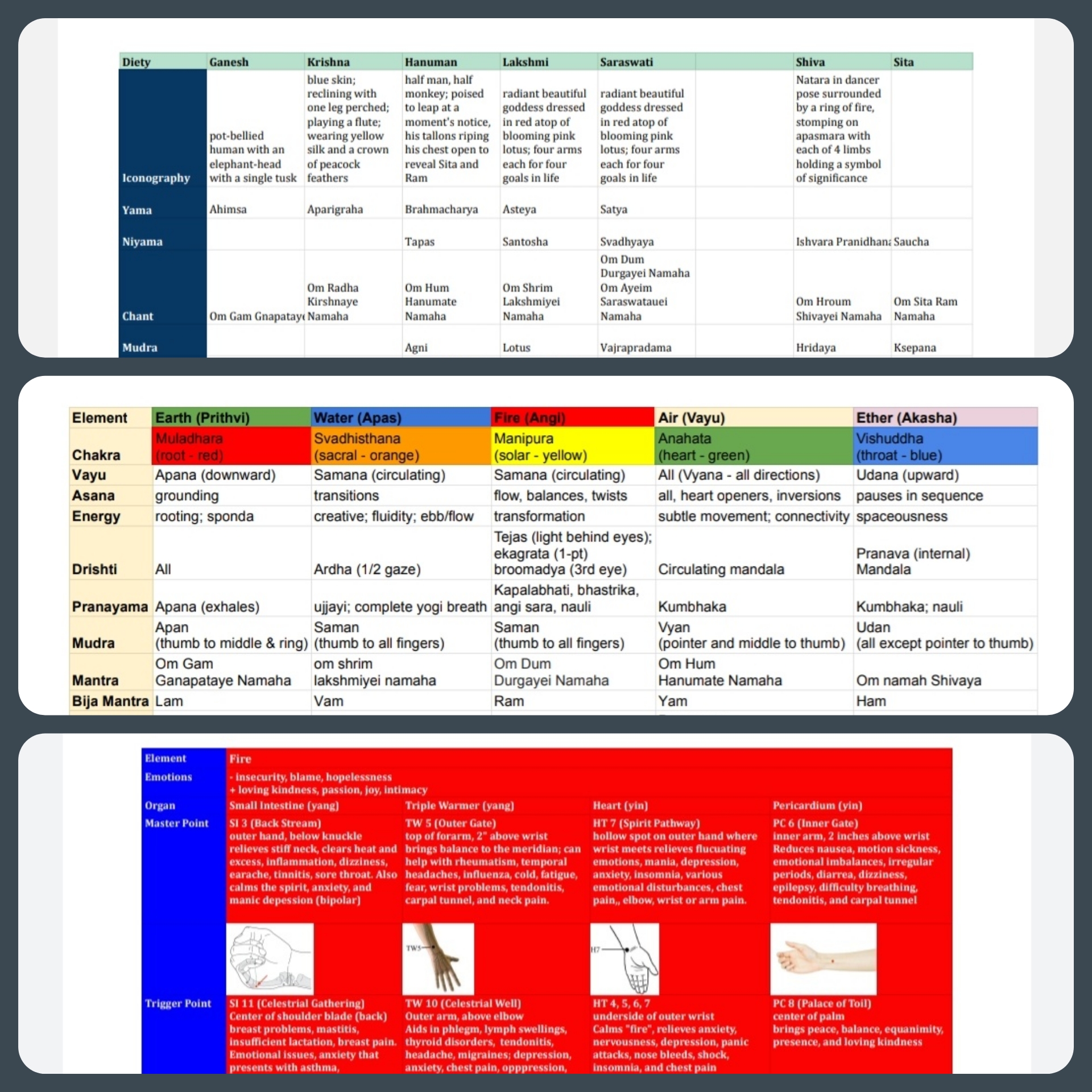
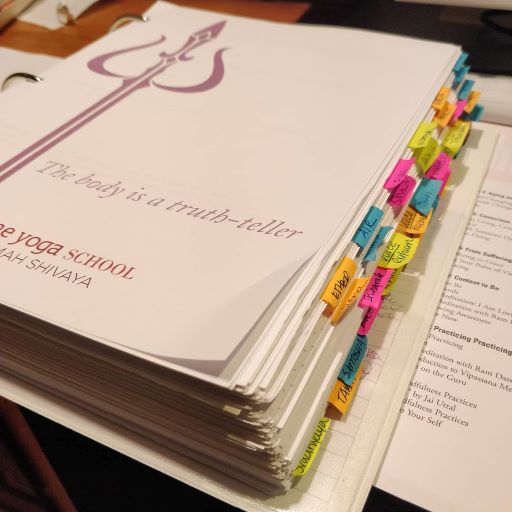
Each training offered truly unique experiences, materials of which are housed in a 4” binder along with my notes, and an entire shelf in my office devoted to course readings. To assist in my synthesizing this wealth of information, I began creating spreadsheets not only to collect, but to categorize and organize the information – often employing color-coding. As a visual learner, these charts were instrumental in helping me to conceptualize the various readings and voluminous amounts of information provided in the training sessions, particularly with regards to the various elements associated with this ancient practice. 

I remember asking Janet many years ago at a Hanuman Festival if there was a teacher or a studio in the Chicagoland area with similar offerings I’ve experienced with her. Her response: “You’ll have to create it.” I knew she wasn’t kidding, but the task seemed impossible. So, I focused on the path and let go of the goal, per se. I began incorporating a few elements and rituals into my own practice which then rippled into my teachings. Further along the path with a deeper connection to the practice, a shift began to occur: students became more interested in delving deeper.

Hanuman Festival, 2015

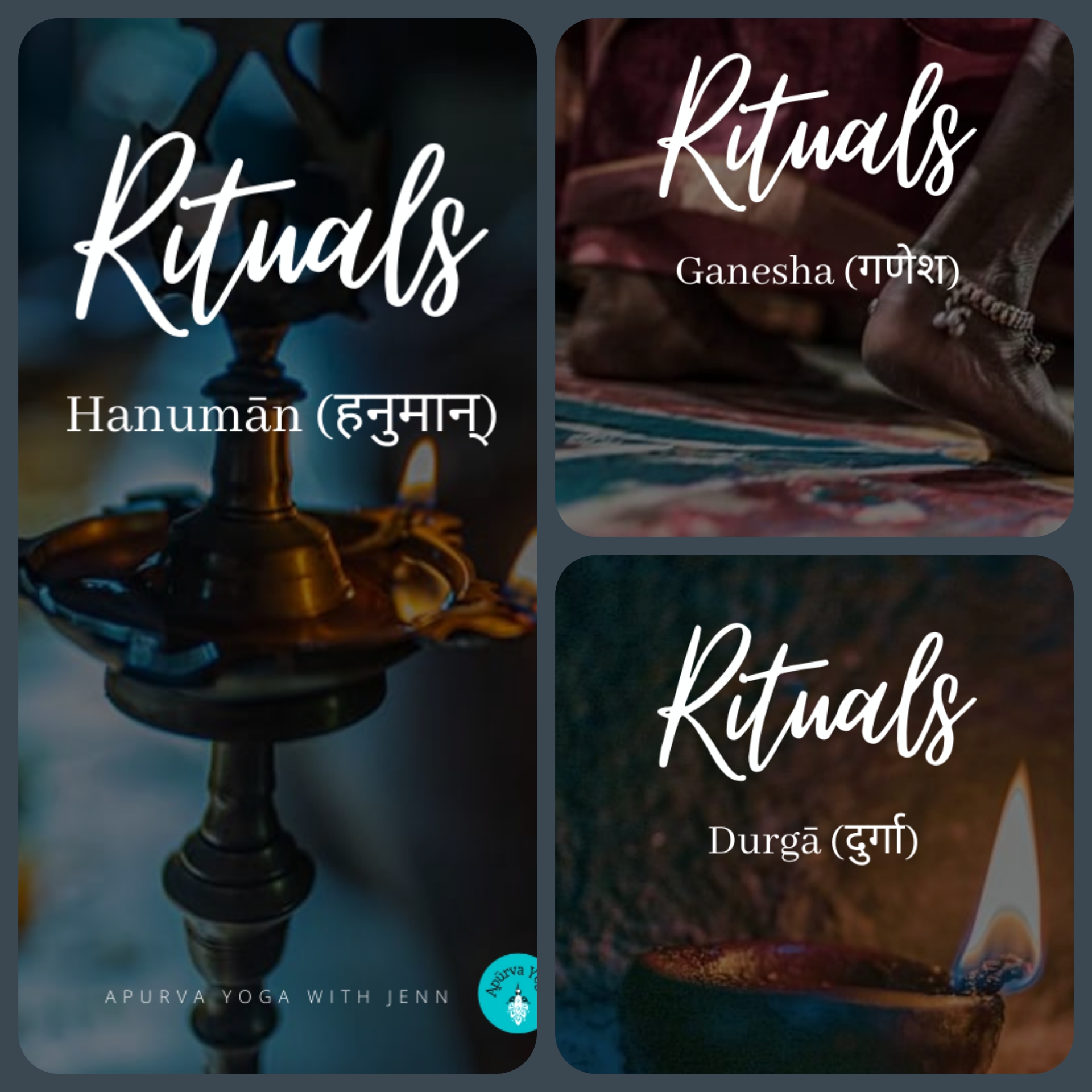
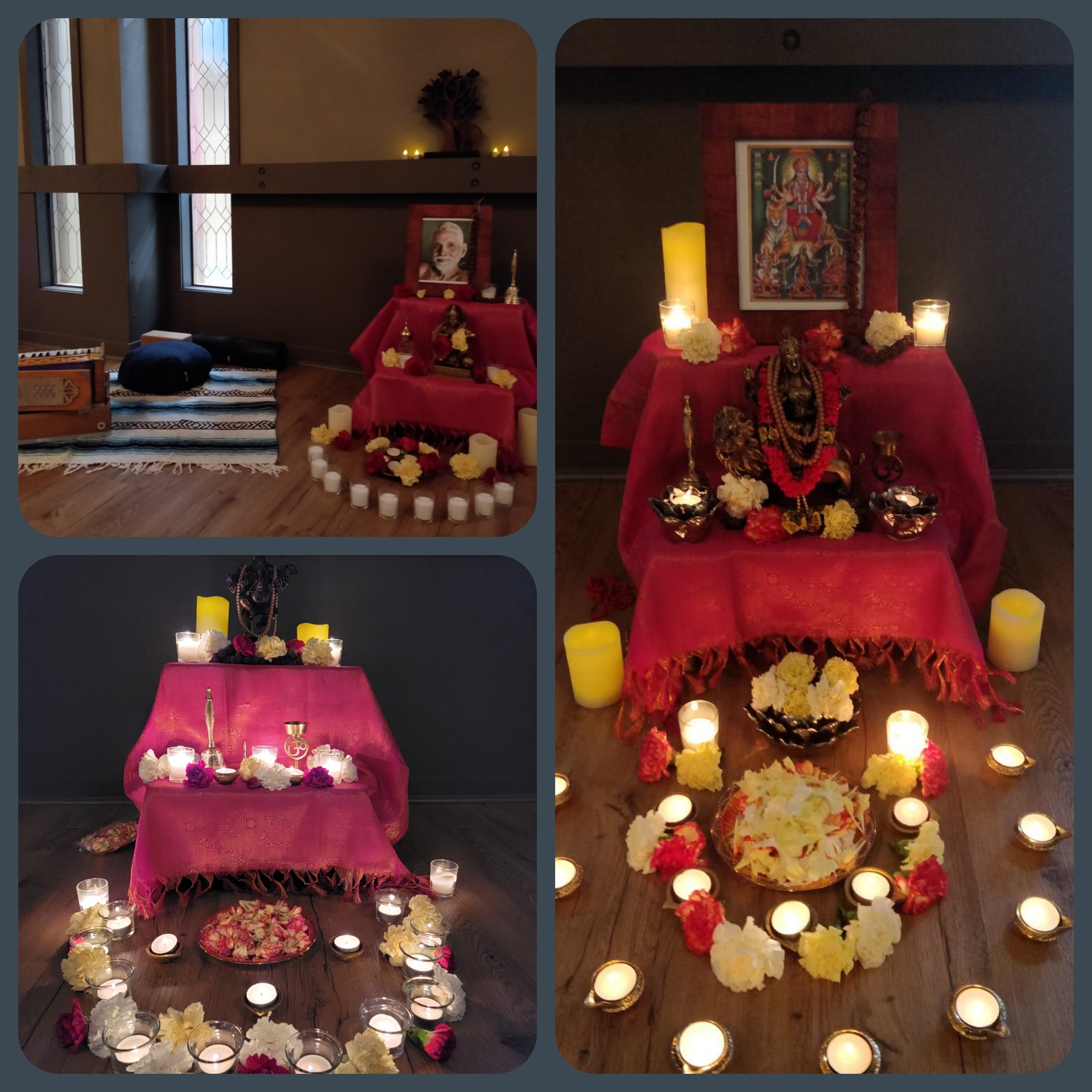
Years later, the aforementioned spreadsheets gave birth to a new offering in the form of a workshop titled “Rituals”. Setting aside a lifetime of fears and doubts, I sought to create a unique experience: a 2-hour workshop that incorporates many of the elements and rituals associated with a particular deity. Having completed Hanuman, Ganesha, and Durga, students are now requesting monthly offerings; fellow teachers are suggesting that these offerings should be included in future YTTs (See Conceptualizations for charts and Rituals Student Manuals). Indeed, what seemed impossible many years ago has now manifested into something magical.

Manual Covers
Altars for Hanuman, Ganesha, and Durga
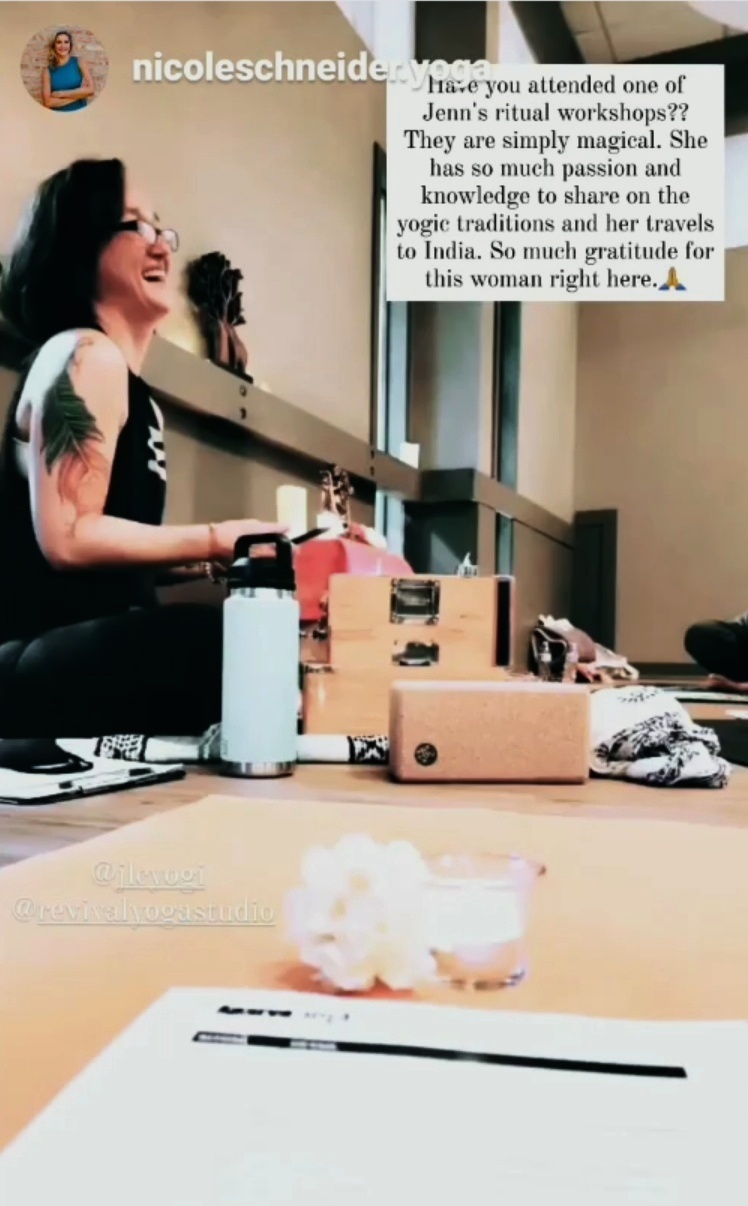
IG Post by Nicole Schneider
Ganesha, December 3, 2021

As stated in my 90-Day Sadhana reflection, there is much that I have learned about myself on this journey – especially during the 2020-21 Pilgrimage to India and the 8-Limbs training (See Sacred India and Living the 8-Limbs of Yoga).  My practice has definitely shifted and evolved over the course of this YTT, and it will continue to do so. For now, I am content and so very honored to have been included. While my Svādhyāya is far from over, I will continue on this path, and I will carry forward all that has been offered to me . . . love, compassion, grace, and gratitude. 

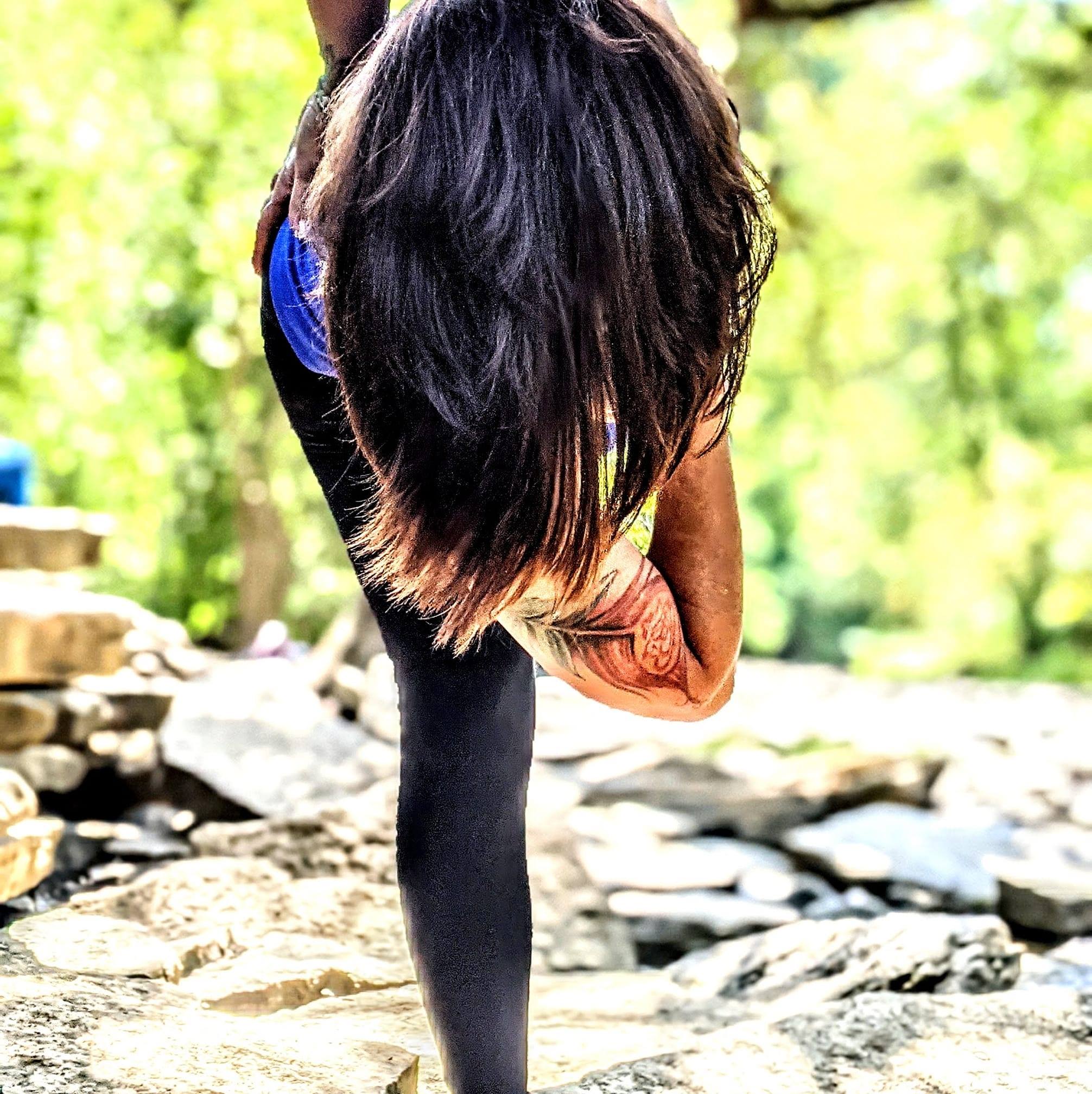
Photo Credit: Wari Om

Respectfully submitted with heartfelt love and immense gratitude.

Om Namah Shivaya

90-Day Sadhana

Posted: January 18, 2022 in YTT Reflections
Photo Credit: Brian Christian Adam

My daily sadhana practice includes ayurvedic morning ritual (cleansing teeth, tongue and face, lemon water) followed by dharma reading with coffee. I then perform Aarti (Hanuman, Ganesha, Durga), meditation with mantra, pranayama with mudra, asana practice, and close with Bhakti (practicing on my harmonium). During this 90-Day Sadhana, I also participated in a 40-Day Hanuman Chalisa Sadhana with Ram Chandra Das and Govind Das. Each day was devoted to a line(s) of the Hanuman Chalisa. The daily session began with aarti, full recitation of the Chalisa, translation and recitation of the day’s assigned line(s), dharma regarding the line(s), followed by bhakti of the full Chalisa

After retiring from public education last year in June, I returned to the Ashtanga practice. The longer holds during each posture (5 breaths each) resulted in more turning in and slowing down in my asana practice. I also began pausing between transitions; pausing to feel and pausing to notice. Additionally, I began exploring the Shakit energy more and incorporating it into my daily practice: beginning sequences on the left (ida) side, longer holds on the left side (especially during yin), and more grounding of the front body. What began to surface was the idea of tapping into Trantric perspective described in Sally Kempton’s Awakening Shakti:

“. . . all our biological activity is inherently feminine. The power behind the breath, . . . our heartbeat, the energy that fires our muscles, and the impulse behind thoughts.” (12)

Kempton, Sally. Awakening Shakti: Transformative Power of the Goddesses of Yoga. Sounds True, 2013.
Photo Credit: Brian Christian Adam

I envision the human digestive process as another form of Shakti – an elaborate process that requires no thought but just is; a process attuned to making use of the good and eliminating what is no longer needed or in excess. The digestive process is not limited to what we literally consume, but also everything that we take in from our other senses, as well as everything that has been passed down from those who came before us. But what surprised me the most was the profound realization (a manifestation of Saraswati) that the Shakti energy is about “being” rather than “doing.” These dramatic pauses in my practice became opportunities for me to simply be, as I am in that very moment, in that very breath; opportunities to bear witness without any judgment, expectation, or reaction; opportunities to sit in the fire of self-acceptance and healing.

Resistance continues to arise in my practice with regards to inversions and backbends. This resistance manifests from deeply rooted fears and feelings of inadequacy stemming from childhood traumas. However, over the course of the Sadhana, I recognize the resistance and attempt to set aside the negative emotions of the past. While I might not succeed in a particular inversion or backbend, I continue to focus on the path rather than the goal. 

What has come with ease in my practice is taking more opportunities to slow down, to feel, as well as the idea of “letting go” – even if it’s only for that moment; only for that breath. Releasing longer holds enables me to relish in the relief that courses through me and reminds me of how good it feels to simply let go – letting go of negative thoughts, emotions, or energy.

Photo Credit: Brian Christian Adam

My practice definitely rippled into my teachings. In fact, my class offerings shifted from Vinyasa to Slowburn and Yin. I never really considered myself a “yin” teacher; I was always  a vinyasa-kind-of-gal who loved the fast-pace, tricky transitions, and heat. However, I’ve noticed that I’ve slowed down. Maybe it is due to my getting older; perhaps, I’m done running and avoiding. Since these slower practices have truly resonated with me, my offerings have become more authentic, thus resonating with my students. Perhaps this need for slowing down and pausing is a direct result of the global pandemic that has created much fear and anxiety. These opportunities to slow down have been well-received in my class offerings.

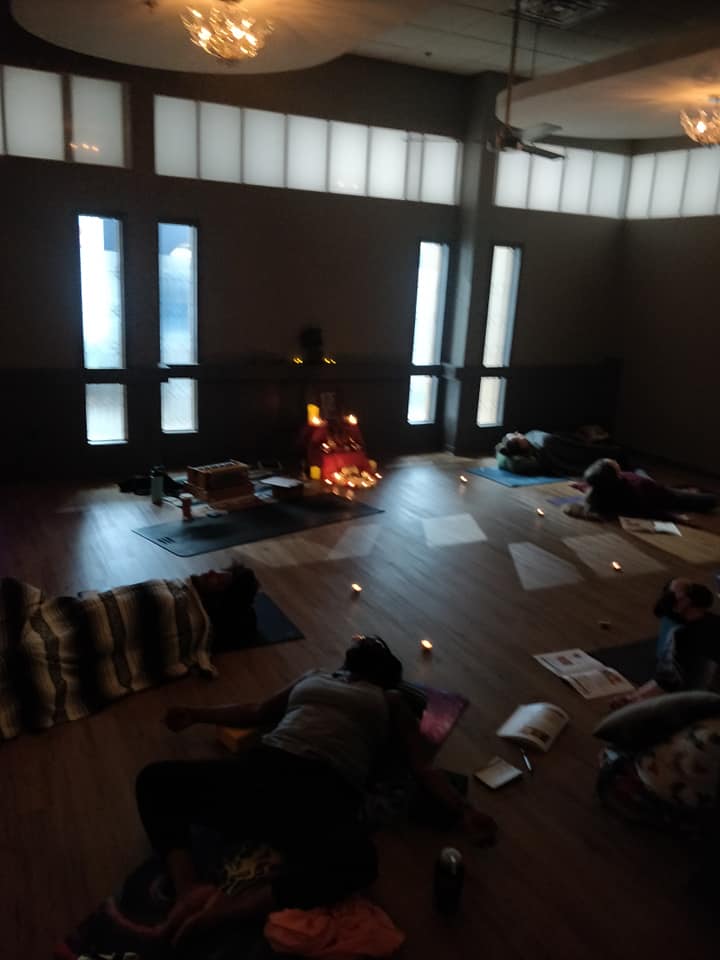
Rituals, 1/16/2022

While there are various ways in which I continue to integrate my daily practice, it is impossible to incorporate everything in a one-hour offering, I always set an intention and allow whatever to be to simply manifest. Oftentimes, I will incorporate my daily dharma reading as well as a particular ritual that resonates with the reading (pranayama, mudra, chakra, and/or niyama, yama). Janet’s question: “What are you up to?” is always in the forefront of my mind before each and every offering. 

As a result of my 90-day sadhana, I have created a unique offering known as “Rituals”. This 2-hour satsang has been well-attended as more students have expressed an interest in delving deeper into the practice. Over the course of the workshop, I incorporate various elements of the practice associated with a particular deity: traditional opening chant; mantra with mudra; iconography, role, embodiment, and dharma; overview of and application to the corresponding Element, Energy, Vayu, Kosha, Chakra, and Nadis; overview of and application to 8-Limbs; pranayama practice; intentional, grounded movement; meridian work (Yin and Restorative postures); and closing with bhakti. 

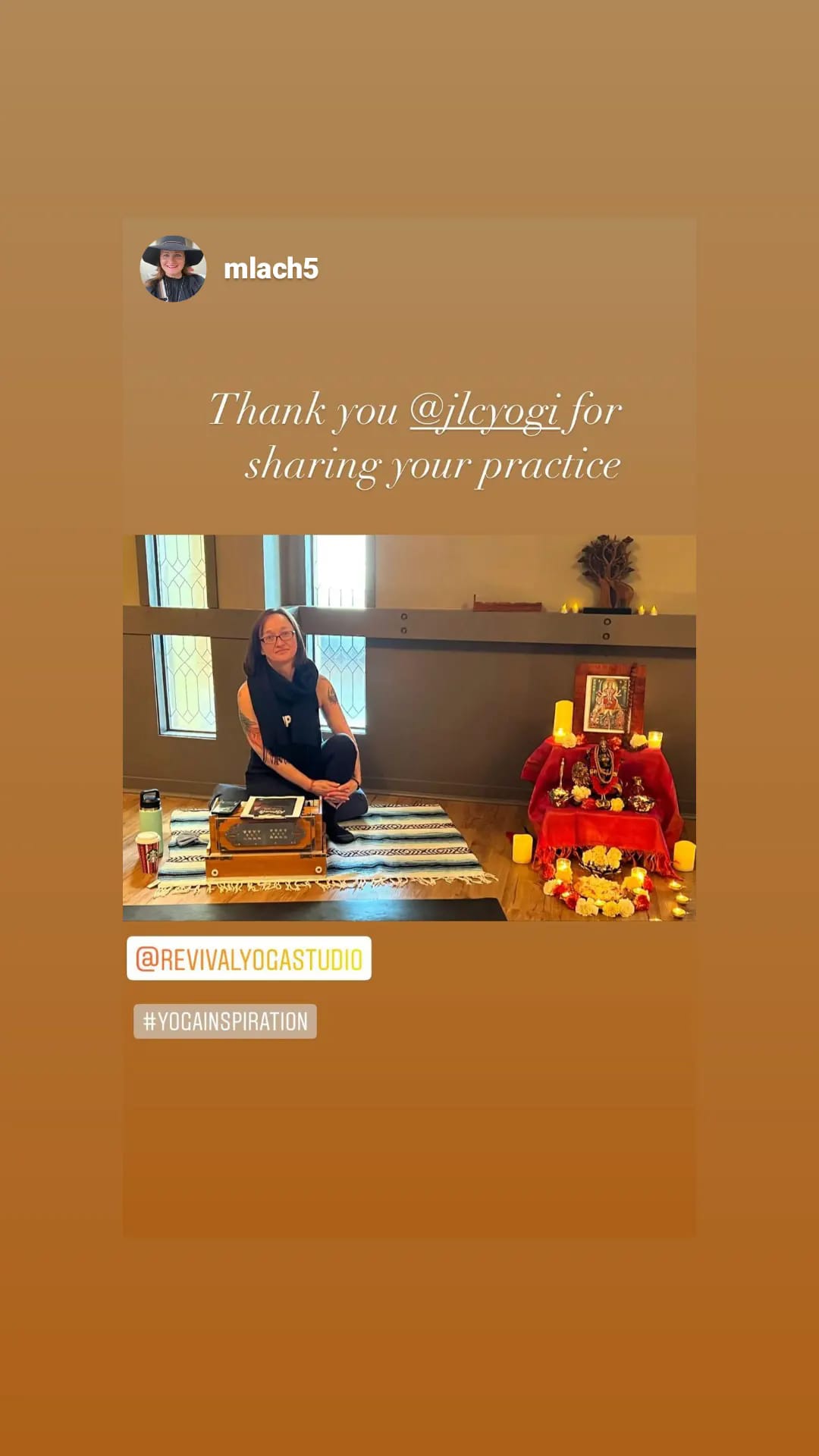
IG Post by Melissa Lach

In closing, the journey is far from over. I will continue to hold myself with love, compassion, and forgiveness so that I can offer the same to all those around me.

Having practiced with Janet since 2011 and training with her since 2016, I am familiar with her style and approach. Through various classes, trainings, and retreats, my appreciation of “slowing down” has been enhanced. In the beginning, I was like Kartikeya – fierce and intense not only in my practice but also in my everyday life.  Since more formal training with Janet, I have become more like Ganesh – calm, patient, and content both on and off my mat. 

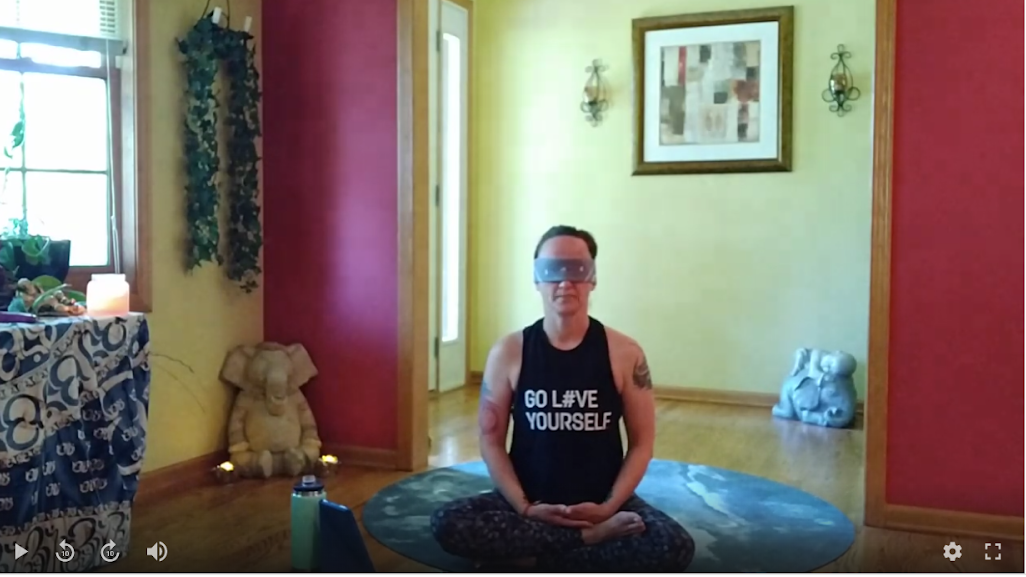
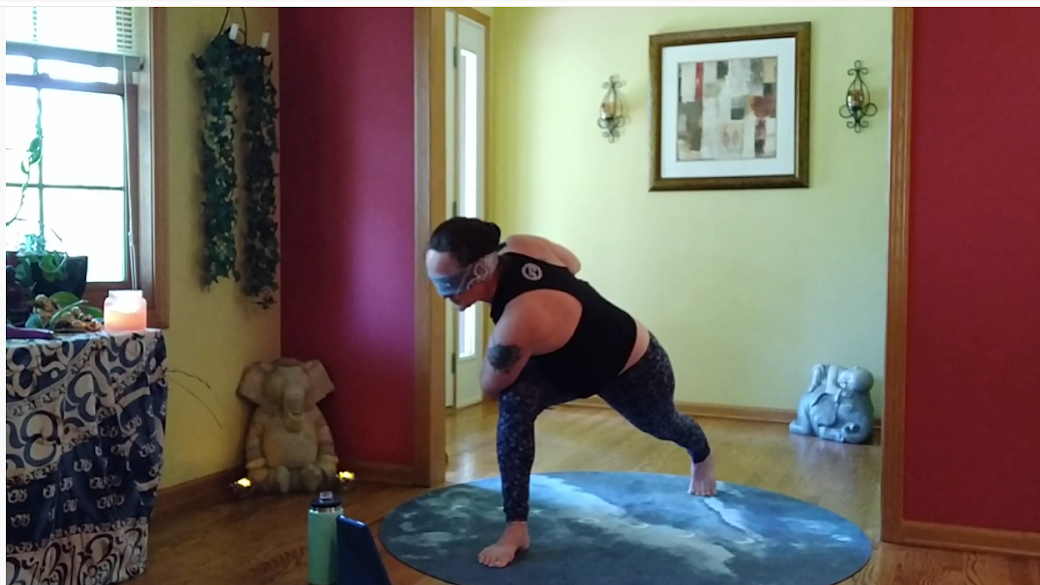
One of the things that really resonated with me in this course were the opportunities to disengage visually. Similarly to the use of blindfolds in her Art of Assisting (specifically Module 3: Foundations and Connections), Janet employed the use of eye pillows and “tenting” in restorative postures. The practice becomes very different without the aid of visual stimulation during the more active and energetic asanas, as well as in the less active, restorative asanas. For me, disengaging the visual heightens my other senses of awareness. 

During my initial 200-hour yoga teacher training with Jonny Kest back in 2011, I was introduced to his concept of Slow Flow: a grounding practice utilizing the complete yogi breath in a darkened room, without vinyasas or balance postures, and music without  lyrics; a practice in which one should be able to complete blindfolded. As part of our training, we were given an opportunity to practice blindfolded. Once placing the blindfold over my eyes, I recall an immediate sense of panic evident in my heart rate and breath. I was very clumsy and distrustful during the beginning of the practice, but once I was able to set aside my fear and reservations, an entirely new practice opened up to me – one that was more sensual and intuitive. I had to slow down and utilize my other senses: listening carefully to his cues and the breathwork of those around me, focusing on my own breath and my connection with the earth, feeling my heartbeat and the sweat on my skin. 

Since this class with Jonny, I have refrained from using my eyeglasses during my practice – visual aids that have become necessary in my everyday life due to excessive use of my eyes over the years; I also frequently close my eyes throughout my practice.  For me, closing the eyes is the ultimate level of self-acceptance and self-trust. After a few injuries, I have become more mindful in my practice and welcome the opportunity to slow down and give myself permission to rest when needed – or as Max Strom states, “Warrior 4.” Through Janet’s trainings, I have come to enjoy the benefits to my nervous system, giving myself permission to rest when needed, expanding my proprioception, and truly connecting with my breath. In my own teachings, I encourage students to elevate their practice by doing the same –  to slow down, to pause, to notice, and to bring their gaze inward. I have also led monthly blindfolded sessions per students’ request. 


This unprecedented time is like a dramatic pause; in literary terms, it is defined as a beat or two of silence that is usually done to heighten the anticipation before the big reveal. The global COVID-19 pandemic has been a much-needed “dramatic pause” in my life; my being “busy” 70+ hours a week decreased to 25+ hours a week. During this time, I was forced to embrace the opportunity to slow down, to sink in, to marinate, to relax, to simply “be” – so this course was perfectly attuned to this surreal time. Having most of the props available in my own practice space,  I was able to lean into the support offered, even if awkward at the beginning. Now, I use blocks more often in my practice – especially under my shoulders when prone, or under my tailbone, mid-back, base of skull, or the ankles when supine. As with the assisting training, I have had to experiment with my own body – which has enabled me to not only identify, but to address my own areas of need. This “dramatic pause” has been healing and nourishing for me as I gradually began to accept and connect to subtlety while allowing myself to be held in blissful, and rest. On or off the mat, when we give ourselves an opportunity to pause, to notice, and to feel, we discover something deep within ourselves.

I was also pleased to revisit the student-teacher mantra first introduced to me recently while in India by Shiva Kumar: 

“Oṃ saha nāv avatu

saha nau bhunaktu

saha vīryaṃ karavāvahai

tejasvi nāv adhītam astu

mā vidviṣāvahai

Om śhānti śhānti śhāntiḥi”

Aum! May we two be protected together. May we be nourished together. May we work together with heroic vigor. May our study together be filled with light. May there never be enmity between us. May it be so. Peace, peace, peace on all levels.

Mantra

Photo Credit: Paula Subler


I look forward to sharing this mantra when in-person classes resume. However, our world as teachers may never be the same – I’m not sure how assists and the restorative asanas will be accessible with the limitations on hands-on assists, the usage and sharing of props. Like the Assist training, I will welcome it as an opportunity to slow down, to be creative, to be open, and to be accepting of the what is, as it is – known, unknown, and within.

Oṃ 🙏


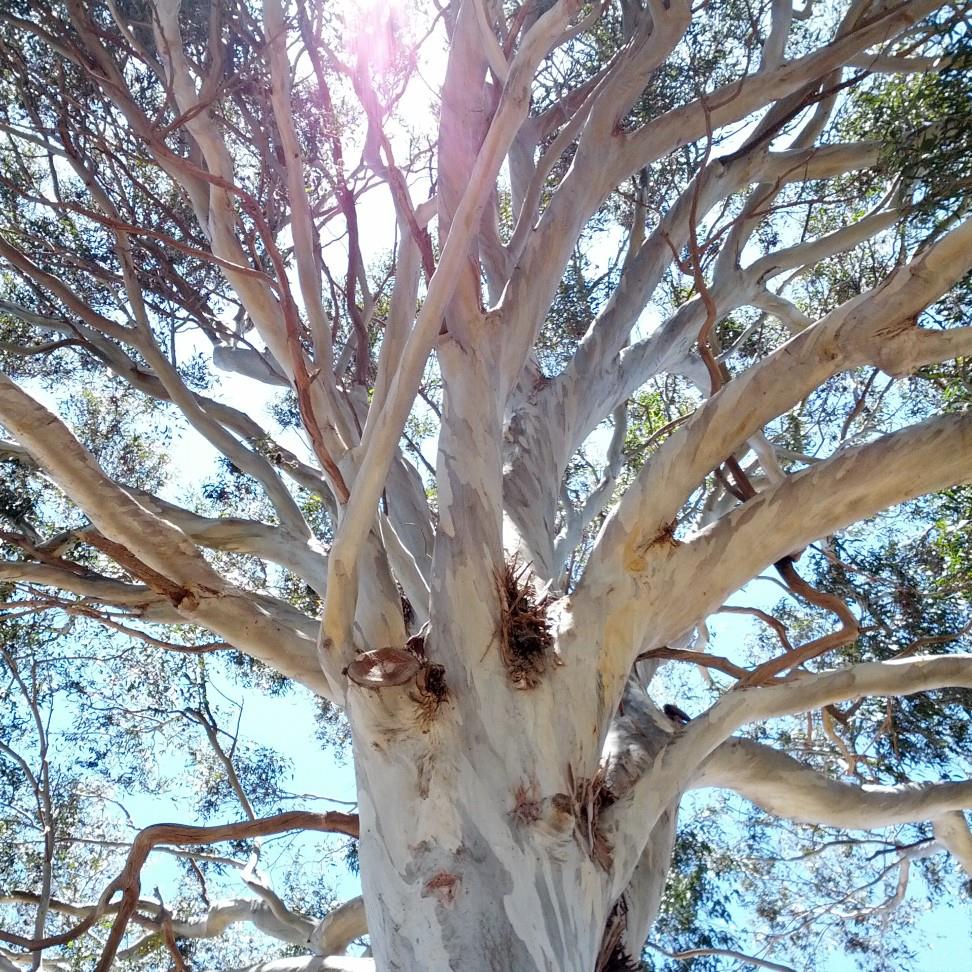
Eucalyptus Tree, San Luis Obispo, CA (2013)

There is definitely a difference between “fixing” and “assisting.” Over the years of practice with various teachers, I have personally experienced both. In some instances, I was taken out of my range of motion and subsequently injured. In other instances, I was taken out of my own head and subsequently discovered something deeper within myself. I have had teachers place their weight on me: standing or lying on my back, wrenching my spine deeper in a twist, tugging on my arm for a bind, or projecting their personal opinions, beliefs, and political agendas. I have had teachers trust me to rely on my own weight: granting me permission to observe without expectations, without judgement; offering verbal and gentle tactile cues to enhance my awareness.

My initial teacher training focused on Ashtanga with an emphasis on adjustments:

ad·just·ment /əˈjəstmənt/ noun: a small alteration or movement made to achieve a desired fit, appearance, or result.

https://www.lexico.com/en/definition/adjustment

While there are many yoga practices that focus on alignment, I have found verbal cues to be most effective in ensuring student safety during an asana practice. Forced adjustments seek to “fix” a posture for ultimate physical benefits and aesthetic purposes. However, I have found over my years of teaching and practicing, that not every posture is for every body. My first teacher would state that we all have “issues in our tissues”, thus making certain postures difficult for some people.  Over time, I have learned my limitations and am working to accept rather than fight against them. So for me, “fixing” implies that something is wrong, whereas “assisting” implies guidance and empathy.

In Levine’s Waking the Tiger, “Traumatic symptoms . . . stem from the frozen residue of energy that has not been resolved and discharged; this residue remains trapped in the nervous system where it can wreak havoc on our bodies and spirits.” (19). According to Levine, I suffer from Developmental Trauma. Through the many years of practice, I have learned a lot about myself as the “decades”, maybe “lifetimes”, of suppression and these conditioned patterns surfaced in my practice – my fear of inversions, my difficulty with backbends, a general distrust of my intuition, and even the fear of my voice – all spilled out and exposed on my mat (149). According to Pema Chodron in Start Where You Are, “We come to have a sense of letting our experience be as it is without trying to manipulate it, push it away, or grasp it.” (7) It is less about “fixing” and more about “assisting” towards acceptance.  Through the continued practice and training, yoga has become a “transformative” way of life for me (Levine, 1), an opportunity to “. . . letting our experience be as it is without trying to manipulate it, push it away, or grasp it.” (Chodron, 7). 

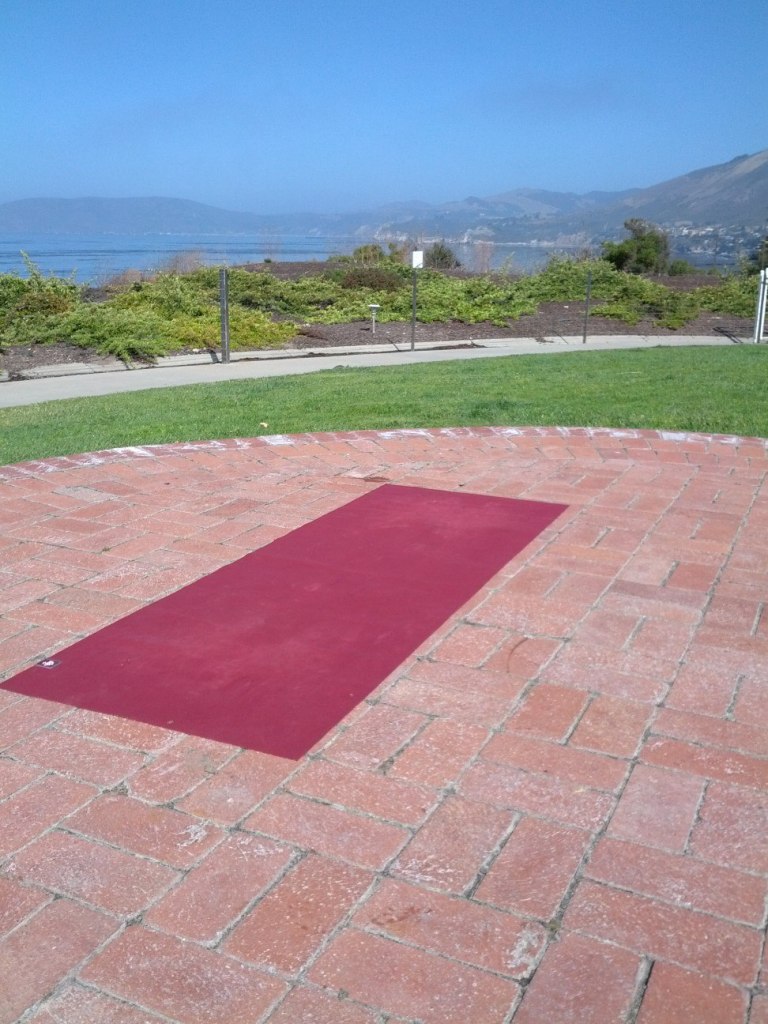
The Cliffs Hotel & Spa, Pismo Beach, CA (2013)

Through assists, I began to identify with the ebb and flow of sensations as “compressed energy” that I have held onto for so many years as they were revealed in my practice (Levine, 76). “Acting out and repressing are the main ways that we shield our hearts, the main ways that we never really connect with our vulnerability, our compassion, our sense of the open, fresh dimension of our being. By acting out or repressing we invite suffering, bewilderment, or confusion to intensify.” (Chodron, 31). I recall struggling through various asanas in the very beginning, being ego-driven to simply accomplish the posture in the basest physical form. However, “. . . compassion starts with making friends with ourselves, and particularly with our poisons – the messy areas.” (33. 46). Years later, as Pema states,  “the first step is to develop compassion for our own wounds,” I was able to connect these sensations with the developmental trauma of my childhood (Preface).

Pismo Beach, CA (2013)

Almost every time I come to my mat, something new is revealed; under the right guidance, an inner freedom is opened or released in the form of an inversion, a back bend, or even singing.  It is through these experiences that I also became aware of how my sense of self is heavily based on past experiences and how new information has filtered through that previously determined sense of self (Levine, 121). My practice evolved to “The moving away from comfort and security, is stepping out into what is unknown, uncharted, and shaky – that’s called enlightenment.” (Chodrom, 18). Indeed, yoga has become my adaptive process allowing for the gradual renegotiation of the “sheaths of memory” relating to the traumas of my lifetime, and quite possibly the traumas of lifetimes before, and “What you do for yourself, you do for others, and what you do for others, you’re doing for yourself” (33). This is part of the practice that I attempt to share when I teach, for “If we enjoy what we are experiencing, to think of other people and wish for them to feel that.” (7). By developing unconditional compassion for myself “leads naturally to unconditional compassion for others.” (Preface). Afterall, “If you can know it in yourself, you can know it in everyone.” (37).

Photo Credit: Sanjin Kastelan, Croatia (2018)

As a teacher, I have to be in the right space – mentally, physically, energetically, and spiritually before teaching a class, especially when offering assists in a class. Every class must begin with moments of stillness, not only for my students, but also for myself. I have to ground myself, calm my mind,  and set my intention for the class, and I guide students to do the same. Through the breath, I am able to bring myself to the present moment, to “Be right there with the breath as it goes out,” is the same thing as saying, “Be fully present.” (Chodron, 5). As it has been my own personal experience, it is my belief that each person has the ability to connect to his/her intuitive nature if given the opportunity and the space to do so, “You can give something that will help someone else connect with their own insight and courage and gentleness, rather than further polarize the situation.” (102). These assists come in the form of verbal and tactile cues: creating more awareness of one’s mind and body at the present moment with compassion and acceptance. As Chodron states,

Buddha is our inherent nature – our buddha nature – and what that means is that if you’re going to grow up fully, the way that it happens is that you begin to connect with the intelligence that you already have.

Chodron, 98

Works Cited:

Chodron, Pema. Start Where You Are: A Guide to Compassionate Living. Shambhala: Boston, 2011.
Levine, Peter A. Waking the Tiger: Healing Trauma. North Atlantic Books: Berkeley, 1997.

“Lord Ram gave Hanuman a quizzical look and said, “What are you, a monkey or a man?” Hanuman bowed his head reverently, folded his hands and said, “When I do not know who I am, I serve You and when I do know who I am, You and I are One.” ― Tulsidas, Sri Ramcharitmanas

This quote is reminiscent of the closing dharmā talk for “Living the 8-Limbs” training with Janet. Indeed, it has been a journey to the self through the self on many levels. Since beginning my training with Janet in 2016, I have discovered much about myself and have been able to embed a lot of the teachings in my own practice as well as incorporate them into my teachings. Throughout this particular training, I found myself spending a great deal of time with each module, some more than others. I was also blessed to have witnessed and experienced the first and second limbs in action while in India. In the end, I have much work to do, but the journey of unpacking continues with more awareness.

First Limb: The Yāmas

The first limb entails The Yāmas that provide guidance with regards to ethical practices through the use of restraints.

Ahiṃsā, the first of the yāmas, dictates nonviolence and compassion. According to Nicolai Bachman in The Path of the Yoga Sutras, “By law of cause and effect, every action has a consequence” (144). Commonly referred to as karma, “I alone am responsible for my thoughts, words, and actions” (147). Indeed, what you put out into the universe comes back to you. The various triggers that may move one towards violence and/or non-compassion include feelings of fear, imbalance, powerlessness, and self-loathing.  Deborah Adele in The Yamas & Niyamas makes a very clear distinction with regards to fear, “We need to know the difference between the fears that keep us alive and the fears that keep us from living.” (23), Much of my deeply rooted fears and feelings of powerlessness stem from my traumatic upbringing. However, it also manifests itself in how I am towards others. According to Adele, “When we try to take someone out of their challenge or suffering, we take them out of the environment that offers them a rich learning experience” (34). There is definitely a fine line between helping and hindering, and I have to remember that my personal experiences are not those of others.

The second yāma, Satyā, is based on truthfulness and sincerity. Adele states, “There is profound courage to this kind of willingness to be raw with reality as it is, rather than to run from it or construct a barrier to soften it.” (54). The triggers that may cause one to lie, either to one’s self or to others, include: the need to protect one’s ego, to create a sense of belonging, or to assuage one’s fear of loss. For me, after a childhood preconditioned towards self-preservation and survival, it has been quite the battle to focus on the reality of the present moment. While I still waiver into preconditioning on occasion, I am better able to recognize it and take a step back: am I trying to protect myself? Am I trying to belong? What am I afraid to lose? Afterall, “To be a bold person of truth is to constantly look for what we are not seeing and to expose ourselves to different views than the ones we hold sacred.” (51).

“The victories of truth have never been won without risks” – Gandhi.
Astēya, the third of the yāmas, involves non-stealing from others. While at first it appears like an obvious commandment “thou shall not steal” it actually goes beyond to include the moments and experiences of others. For example, “If we interrupt someone during a conversation, we steal their right to be heard.” (Bachman, 154, 163). Being solutions-oriented with a wide range of experiences, I often have to stop myself from offering my own personal experience, suggestions, feedback, and opinions. Over time, I have learned that life struggles are not always a bad thing: “Often we mistake these tasks as a burden rather than an opportunity to grow our compassion and skill level.” (Adele, 72). However, my life struggles are mine alone and do not necessarily apply to others. Over the years, I have been working on actively listening and allowing others the opportunity to process. In this sense, “Receiving is giving as well.” (Bachman, 155). Adele takes it further and on a personal level for me, “All self-sabotage, lack of belief in ourselves, low self-esteem, judgements, criticisms, and demands for perfection are forms of self-abuse in which we destroy the very essence of our vitality.” (66). My being a perfectionist with low self-esteem manifests in my need to be useful and helpful. 

The fourth yāma, Brahmacharya, concerns the conservation of vital energy and advocates non-excess. According to Bachman, “Throughout life, it involves control, moderation, pacing ourselves, and maintaining our inner orientation” (158). However, on a deeper level, Adele states “Practicing non-excess preserves and honors this life force within us, so that we can live with clarity and sacredness” (81). Feelings that might trigger excess or wasting of energies include feelings of avoidance, denial, isolation, and insignificance. As a mother and professional educator, I often struggle with balance between my work and personal lives. I often sacrifice my own practice and well-being for the sake of others. Additionally, when  feelings of insignificance arise, I devote more energy towards those areas in my life in which those feelings reside. Now that I am more aware of these tendencies, I am in the process of finding more balance. 

“We begin to see the sacred in the ordinary and the ordinary in the sacred.” (Adele, 82).

Aparigraha, the final yāma, concerns non-hoarding. I found myself reflecting on this yāma more than the others probably because it is the one I struggle with the most. My “hoarding” is not of the material nature, but more about who I am in relation to my past. For most of my life, I have embraced my past as contributing to the person I am today: a survivor, strong, compassionate, and courageous. While I understand the nature of impermanence, I continue to find myself grasping to this identity. According to Adele, “Subtle attachments come in the form of our images and beliefs about ourselves.” (95). Despite my traumatic upbringing, I have done very well to persevere. However, how does the “story” continue to serve me? In what way does it continue to define me? Why am I so attached to it? Clearly, I have to find a way to let go of the past, for “Letting go of the ownership opens us up to full engagement with what is set before us in the present moment.” (98). Since my abuser passed several years ago, I have been able to let go of the story a little bit at a time. 


Second Limb: The Niyāmas

The second limb entails The Niyāmas that provide guidance with regards to one’s personal self-care.

The first of the niyāmas is Saucha, cleanliness of “our bodies, our thoughts and our words” (105). According to Adele, “Cleanliness is a process of scrubbing the outside of us; it changes our outer appearance. Purification works on our insides and changes our very essence.” (109). However, she further clarifies, “Purity is not our attempt to make something different than it is, rather it is to be pure in our relationship with it, as it is in the moment.” (109). Again, the emphasis is on the present moment. Personally, it also reminds me of my need to control, especially when my reality is beyond my control. This typically manifests itself through my “perfectionism” in my immediate environment. Over the years, I have been “stepping back into a quiet space, regrouping our thoughts, updating our to-do list, and organizing our workspace in order to calm the heart-mind and reduce stress and anxiety” (Bachman, 76).  As a result, I have become far less reactive, but again, there are moments in which my control waivers.

“I enter fully into each experience, / and I come out fully from each of them, too. / I put the whole of me into all I do, / and . . . out of all I do.” – Krishnamurti

Santoṣā, contentment and gratitude, is the second niyāma – it “is being grateful for what we have and content with who we are and where we are in life.” (Bachman, 179). I was first introduced to this niyāma during the 5-Elements training in Mexico, 2016. Since the training, each and every one of my practices incorporates moments of gratitude. However, while I have immense gratitude, I also struggle with attachment in my practice as well as in my teaching. According to Bachman, “One aspect of contentment is being unattached to the results of our actions” (181). Adele pinpoints this succinctly, it “invites us into contentment by taking refuge in a calm center, opening our hearts in gratitude for what we do have, and practicing the paradox of ‘not seeking’” (120). Feelings of complacency, regret, and seeking happiness have kept me from finding balance. However, I am gradually becoming more aware of staying present, because “There is nothing more that can or does exist than this very moment.” (122).

Kriyā-Yoga

The last three niyāmas are grouped to form Kriyā-Yoga: Tāpas, Svādhyāya, and Iśvara-Praṇidhāna. Collectively, they create a practice in action in which “to weaken our mental-emotional afflictions (kleśas), and cultiplate complete attention (samādhi).” (Bachman, 186).

Tāpas, the third of the niyāmas, relates to one’s physical practice that serves to cause positive change. According to Bachman, “Tapas creates heat and thus change” (190). Indeed, if it doesn’t challenge you, it won’t change you, thus “Change is necessary for progress to occur” (191). Since beginning a regular yoga practice over 14 years ago, what began as an ego-driven practice slowly evolved into a more mindful practice. There are instances in my own practice in which I challenge myself: holding a particular posture or attempting a posture in which I am laden with fear. Can I breath through it? Can I let it go if I don’t succeed? Can I do it without need or desire? Can I find balance between effort and effortlessness? Can I find comfort in discomfort? Indeed, Adele’s question encapsulates this inner dialogue, “Can we grow our ability to stay in the fire and let ourselves be burned until we are blessed by the very thing that is causing us the pain and suffering?” (141). Afterwards, it has been instrumental in my everyday life, particularly in those instances of crisis: “The promise of a crisis is that it will pick us up and deposit us on the other side of something.” (143). While I continue to have moments in which I want to “fight” or “flee”, my reaction has softened and become more mindful.

The fourth niyāma, Svādhyāya, is the study by and of one’s self. This niyāma was initially introduced to me during the Energetic Alignment and Intuitive Sequencing trainings. As stated earlier, the past few years have been an intense self-study for me. One of the required readings, Peter Levine’s Waking the Tiger: Healing Trauma was key in understanding the effects of my pre-conditioning. According to Bachman, “Self-observation gives us the power to convert old, harmful behavior into new, helpful action” (197-98). It is definitely a process of revealing the many “boxes” that constrain me (Adele, 149). These revelations have occurred throughout my practices and various trainings, thus making me more aware: “The witness is our ability to watch ourselves act and respond. It is our ability to watch our thoughts and our emotional disturbances . . . . The witness is our ability to watch the ego rather than identify with it.” (159). Not only does every single practice begin and end in stillness to observe, but I catch myself pausing throughout my day to simply observe and to witness. According to Adele, “self-study is about knowing our true identity as Divine and understanding the boxes we are wrapped in. This process of knowing ourselves, and the boxes that adorn us, creates a pathway to freedom.” (149). For me, Bhaktī reveals qualities that I have either discovered within myself or am still seeking to find, afterall, “We are, at the core, divine consciousness.” (149).

“We don’t see things as they are, we see things as we are.” – Anais Nin

Iśvara-Praṇidhāna, the final niyāma of Kriyā-Yoga, is surrending with humility and faith. According to Adele, “Surrender invites us to be active participants in life, totally present and fluid with each moment, while appreciating the magnitude and mystery of what we are participating in.” (166). There are an innumerable amount of unknown variables throughout my day-to-day life – a long list of “What ifs” . . .  What if the weather or an accident affects my commute? What if I am in an accident? What if my students are “off the chain” today? What if my son is having a bad day? However, “Faith in the unknown can neutralize fear of the unknown.” (Buchman, 202). Referring back to the Yāmas, it requires us “To be strong enough to engage each moment with integrity and at the same time to be soft enough to flow with the current of life” (Adele, 172). Surrendering is by no means a passive act – it is a struggle that tests our integrity and requires an immense amount of courage (170). It also requires trust and faith in a divine force and acceptance “that whatever happens, happens.” (165, 204).  For me, “Hanuman Bolo” immediately comes to mind in my daily “leaps” into the unknown.
The Third and Fourth Limbs

The third and fourth limbs entail one’s personal practice, to include Āsana and Prāṇāyāma.  Āsana is the refinement of the body. Through physical practice, “impurities are churned up and released, allowing our life force (prāṇā) to flow more easily and improving our overall well-being.” (Bachman, 207). The physical practice also entails the regulation of breath, known as Prāṇāyāma since “Breath is a physical manifestation of prāṇā” (212). According to Bachman, “Prāṇāmoves everything in the body, including blood, lymph, nerve impulses, and ions. It also moves within our subtle energy points (marmas), energy channels (nādis), and energy centers (chakras).” (212). Thus, “Breathing exercises manipulate the prana and directly affect the body and the mind through the nervous system.” (213). Considering the importance and effects of prāṇāyāma, “The aim of Āsana is to reduce any hyperactivity in the nervous system” (208). In the early years of my yoga practice, it was purely about perfecting the postures and very little to do with my intuition or breathwork. Now, my practice focuses more on my breathwork and intuitively responding to what my body communicates to me in my physical practice.

The Fifth through Eighth Limbs

The fifth through eighth limbs concern one’s inner development known as Saṃyāma, inward concentration. Collectively, it is a means to move towards subtly and deeper the various layers of pre-conditioning. It begins with Pratyāhāra, the fifth limb, by tuning out sensory distractions where “we do not register sights, sounds, or other sensory details around us and are no longer distracted by external objects” (218). By tuning out our sensory distractions, “The true nature of our heart-mind is transparency, which allows out inner light of awareness to shine through our being without distortion and illuminate our world with knowledge, kindness, and compassion.” (219). With my attempts to find balance in my life, this continues to be a struggle for me, thus calming the mind chatter (chitta vritti) has always been a challenge for me. However, I have found that in my practice, I am able to gradually increase my ability to tune out distractions.
Saṃyāma progresses through to the sixth limb, Dhāraṇā, which Bachman defines as “keeping the attention on a single place” (227). Through the use of prāṇāyāma, we can draw our focus to one single point to help us to eliminate distractions; it entails becoming quiet, finding stillness, and acceptance of the present moment. Bachman suggests, “It is said in the Katha Upanishad (Kaṭhopaniṣad) that a flame the size of a thumb burns continuously in the heart, like a pilot light of life” (228). Janet’s guided meditation for Saṃyāma drawing attention to a focal point and allowing it to expand outward and then contract inward is something I will be incorporating to help me not only with the Pratyāhāra, but with maintaining that focus.

By extending the duration of focus leads us to the Seventh Limb, Dhyāna. According to Bachman, “Dhyāna blocks out the afflictive thoughts and emotions, allowing our heart-mind to absorb only the positive energy of the chosen object” (232). Here, one surrenders without any need to control and sets aside any pre-conditioning, and “If our chosen object is our heart, then we realize the same holds true for ourselves” (233). Once complete attention is attained, one enters the Eighth Limb known as Samādhi. Described as a spontaneous interaction with the here and now in complete and pure awareness, it becomes a realm of non-duality: “At this stage, there is no perception of a subject separate from its object.” (235). 

“It is by going down into the abyss that we recover the treasures of life. Where you stumble, there lies your treasure.” – Joseph Campbell

As my reflection indicates, the long and arduous journey continues. Indeed, there is a lifetime of constructs and pre-conditionings that I need to work through. However, through these training sessions and my continued practice, the “boxes” reveal themselves, making me more mindful and aware. When I forget who I am, I will look deep within and remember.

Jaya Sita Rama, Jai Jai Hanuman 🙏

Works Cited:

Adele, Deborah. The Yamas & Niyamas: Exploring Yoga’s Ethical Practice. On-Word Bound: Duluth, 2009.

Bachman, Nicolai. The Path of the Yoga Sutras: a practical guide to the core of yoga. Sounds True: Boulder, 2011.

Sacred India

Posted: April 10, 2020 in YTT Reflections

India

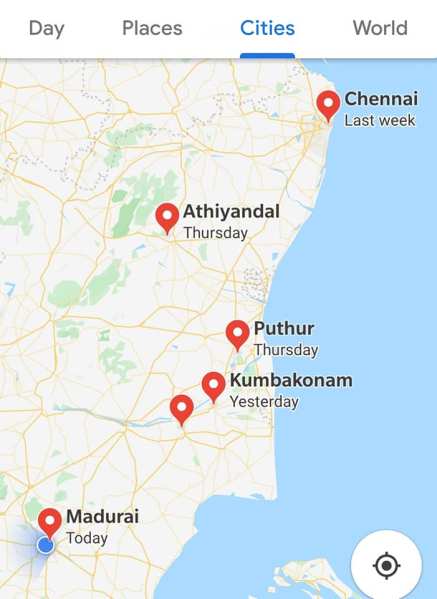
The New Year’s Pilgrimage through India revealed a practice that extends well-beyond one’s mat. Throughout the 188+ miles traveled through the province of Tamil Nadu, I found myself often reflecting on Patanjali’s Yoga Sutras – yoga in action, in devotion, and in daily life. It was inspiring not only to witness but encouraged to participate in a journey of self-study (Svadhyaya).
I have enjoyed traveling and visiting other countries with the Sangha and our teacher, so India was a unique opportunity (rāga). However, there were so many unknown variables and risks: traveling alone, being on an airplane for 20+ hours, and being in a foreign country to name just a few (dveṣa). For me, the journey began with Ahimsa (nonviolence): having the courage to set aside my fears and reservations about traveling to India. According to Deborah Adele’s The Yamas & Niyamas: Exploring Yoga’s Ethical Practice,

“Seeking out people and experiences we would normally avoid provides a fertile place to learn new things about ourselves and about life.” (23).

The dualities of power and powerlessness were strong . . . what to pack, flight schedules, transport, annoculations, and immunizations. Truthfully, I was in need of compassion . . . “[w]e learn compassion as we dissolve our personal version of the world, and grow gentle eyes that are not afraid to see reality as it is.” (37). This was a unique experience to explore without any judgement or expectations – to be a visitor to the human experience (62). crowd

On the first day in India, Satya (truthfulness) unveiled itself. In a desire to explore the city of Chennai and to combat jet-lag, I attempted an excursion. Unfortunately, I was completely unprepared for the sensory overload: the colors, the constant honking of horns; thousands of people on foot, bicycles, scooters, mopeds, motorcycles, tuk-tuks, cars, vans, taxis, and buses all vying for a turn on the road. My anxiety and fear were exacerbated when the Uber driver, who spoke very little English, seemed unsure of where he was going. My inability to “stay present in life no matter what its initial unpleasantness” manifested itself in motion sickness, so I returned to the safety of the hotel (53). Afterall, “[t]here is a profound courage to this kind of willingness to be raw with reality as it is, rather than to run from it or construct a barrier to soften it.” (54). Clearly, India cannot be forced – a reminder that by forcing an experience, I was actually stealing (Asteya) from it.
The lessons learned from this attempted excursion created a real opportunity for growth, particularly with regards to Patanjali’s Yoga Sutras. While all of the moments in India were memorable, there are specific ones I frequently reflect upon: the street vendor outside of the Sri Ramanasramam in Thiruvannamalai, the Puja Ceremony with Shiva Kumar, the early morning pradakshina (circumambulate) around Mt. Arunachala, and the visit to Brihadeeswara Temple in Thanjavur. In all these instances, there was sacredness in community.

The Vendor and His Wife

vendor

A few days into our Pilgrimage, I bravely decided to venture via Tuk-Tuk into Thiruvannamalai to do a meditative practice at Samadhi Hall of Sri Ramanasramam. Afterwards, I took a walk around the grounds and proceeded along the main street just outside of the ashram where I came upon a vendor selling malas. When I inquired if she had a sandalwood mala, she immediately asked her husband who appeared from behind the cart with a separate bag. He presented me with a beautiful and fragrant sandalwood mala. Not only did he offer a great price, but he also blessed it (Brahmacharya). He also suggested that the mala be worn underneath, next to the skin to keep the blessing close to my heart. After asking if I knew how to use it for japa mantras, I demonstrated with the beads between my index and middle finger using my thumb to pull each bead through; he suggested placing the beads between my ring and middle finger instead to avoid the index finger from touching the beads (the index finger is associated with the Ego) (Satya).
After handing him my payment, his wife presented me with an additional mala as a gift (Aparaigraha). The vendor returned with my change and directed me to take a seat in the shade from the midday heat. He then asked his wife to procure a fresh coconut (Ahimsa). Despite my respectful decline, he insisted that it was no trouble. I found myself graciously and gratefully surrendering into the moment (Santosha/Ishvara Pranidhana). Sitting in the shade enjoying the fresh coconut milk, I reflected on Asteya (nonstealing). According to Adele,

“[t]he ownership of things is steeped deep in our language and culture and makes it hard for us to appreciate the extent to which nothing is really ours . . . the bounty of the earth is for the community, not the individual.” (63).

Despite my being a foreigner, the vendor and his wife welcomed me into their community with great compassion and generosity – making a basic economic transaction a very sacred experience.

The New Year’s Eve Puja Ceremony

82151928_10157271892713995_1562833780337541120_n

81496119_10157271894003995_5532998585508954112_n

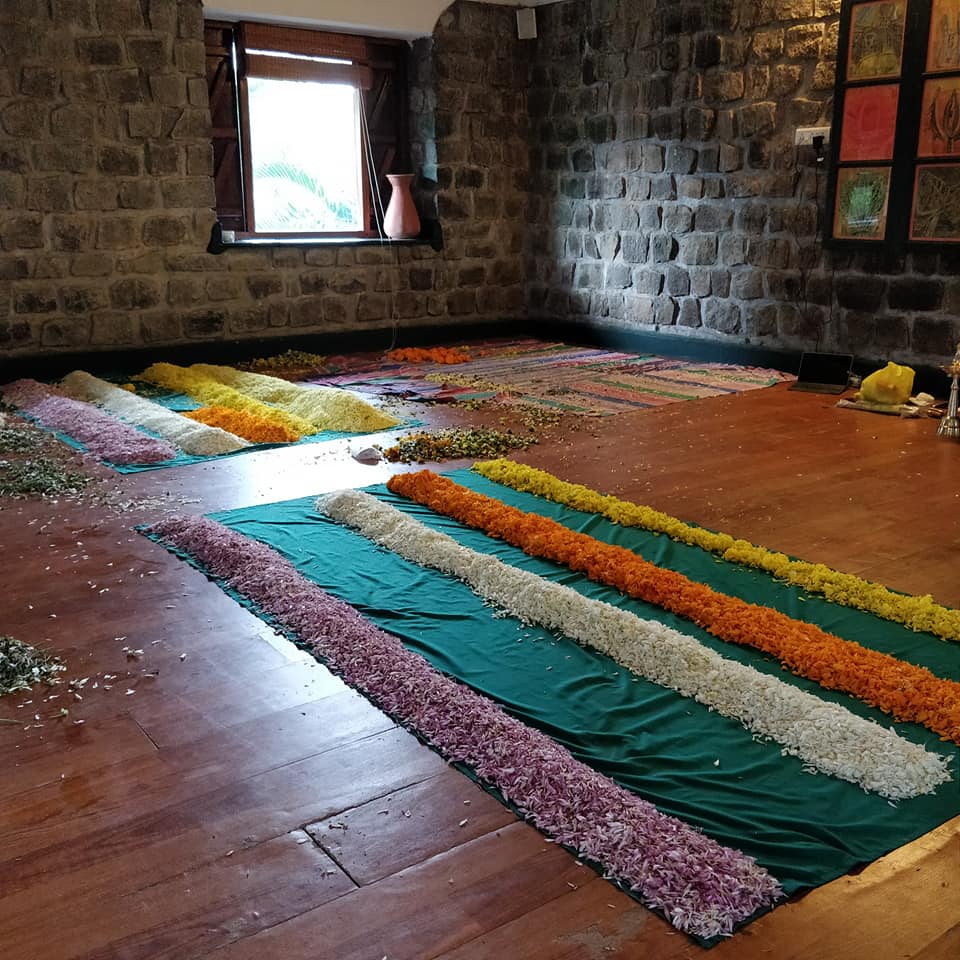
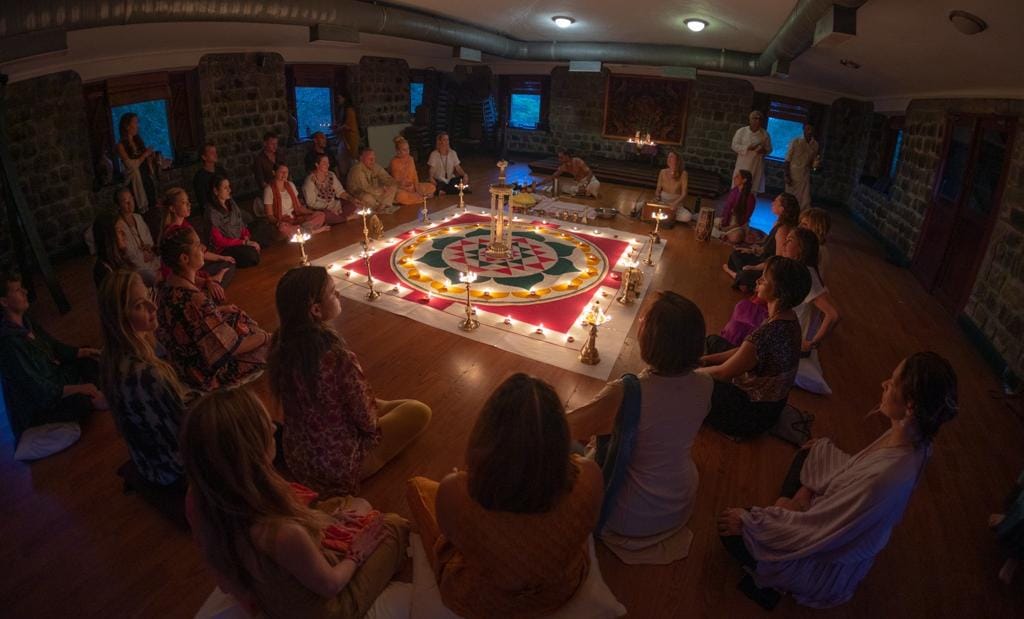
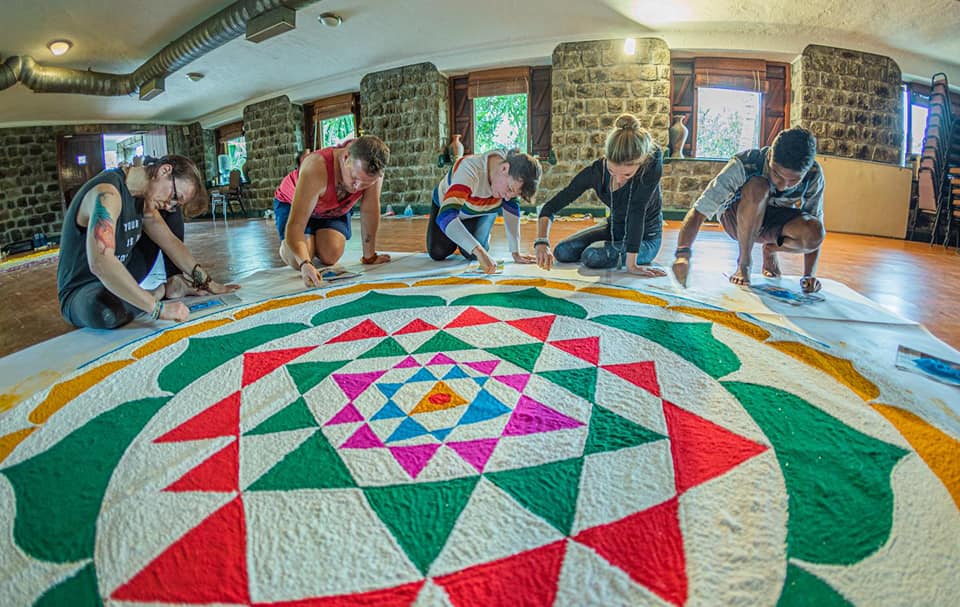
Having been able to participate in two Puja ceremonies while in India, the most powerful ceremony was led by Shiva Kumar on New Year’s Eve. A few factors set this ceremony apart from the Puja at the Nataraja Temple in Chidambaram. First was the collaborative effort of the Sangha in the creation of the yantra (sand mandala) and the pushpam (flowers). Additionally, the ceremony was private, involving only our Sangha as opposed to the very public setting at the Temple; this privacy created a space of trust and encouraged vulnerability.
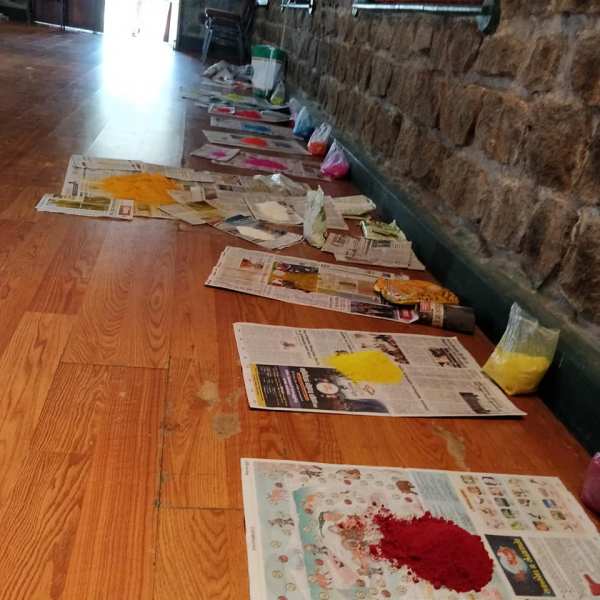
For me, the preparation for the Puja ceremony revealed many aspects of the Yamas. While I have assisted in the creation of a Buddhist sand mandala using tools, this was a new experience using only my hands. I had to find courage in not knowing how in order to learn (Ahimsa); I had to focus on self-expression rather than perfection or how it should be; (Satya); I had to curb my desire to help others so as not to take away from their experience (Asteya); I had to focus on the sacredness rather than the reward of a finished product (Brahmacharya), and I had to let go of the need to complete it (Aparigraha).

yantra creation

Photo Credit: Wari Ananda Om

With my hands stained by the colored sand and still fragrant from the flowers, nothing had prepared me for what I was about to experience. All of the preparations of the day culminated in an awe-inspiring setting that took my breath away when I entered the space. The completed, brightly colored yantra was fully illuminated by the strategically placed earthen and brass oil lamps, along with the sculptures of idols Shiva, Ganesh, and Hanuman.

Yantra

Photo Credit: Wari Ananda Om

One of the required texts for the Pilgrimage was William Dalrymple’s Nine Lives: In Search for the Sacred in Modern India. Each chapter explores the lives of nine people from different belief systems, and each was very interesting. However, the chapter that really resonated with me and reflected the Puja Ceremony was the “The Maker of Idols”. Srikanda is “a Brahmin and an idol maker (Stpathy) who creates bronze sculptures used in various Hindu ceremonies (171). According to Srikanda, “The gods created man . . . but here we are so blessed that we – simple men as we are – help to create the gods.” (171). Practicing Aparigraha (non possessiveness), he states, “once the deity takes on the form of the idol and becomes alive, it is no longer mine.” (174). Throughout the chapter, he reveals the many rituals (Shilpa Shastras) associated with the creation of these idols, including the incantations before (Admartha Slokas) and during (Dhyana Slokas), “You need to maintain not just your skills, but also your discipline” (Tapas) (191-193).

Shiva Kumar

Photo Credit: Wari Ananda Om

Srikanda states, “Without faith, of course, it is just a sculpture. It’s the faith of devotees that turns it into a god.” (174). During the Puja ceremony, Shiva Kumar, our priest, invoked the jivan (life) into the deities through the use various sensory offerings: dhupam (incense), aarti/deepam (light), naivedyam (food), jalam (water), mantram (recitation of sacred verses), ghanti (ringing of the bell), and pushpam (flower petals). Members of the Sangha were also given the opportunity to participate in the offerings through singing and pushpam. It was truly an ethereal experience. The experience reminded me of the “eye-opening” ceremony recounted by Srikanda, “My father acted as the priest, invoking the deity to enter the statute, slowly chiselling open the eyes, and I sat there in a state that was part nerves, part excitement, and part intense devotion.” (198).
Indeed, intense devotion has a way of creating intense emotion. As this was a private ceremony, I felt a sense of security that enabled me to be real and vulnerable (Satya). Of all the moments from the ceremony, there are two that are deeply embedded in my mind and in my heart. The first occurred after a round of singing, our teacher circulated to perform tilaka (the application of the kumkum powder). I was overcome with emotion when she knelt down before me, and our eyes met. Her gaze seemed to invite me to “dive deep into the ocean of the heart.” (239). There, feelings of immense gratitude arose that, even now, brought tears to my eyes. During this dramatic pause in time and space, I acknowledged the divineness that resides deep within her as well as within myself.
Another chapter from Dalrymple’s Nine Lives that resonated with me during the Puja Ceremony was “The Song of the Blind Minstrel.” This chapter recounts the stories of a group of wandering minstrels (Bauls), whose “goal is to discover the divine inner knowledge” as a means to acquire power over the self (227-229). Kanai states, “The happiness and joy that comes with the music helps you find God inside yourself.” (251).

aarti

Photo Credit: Wari Ananda Om

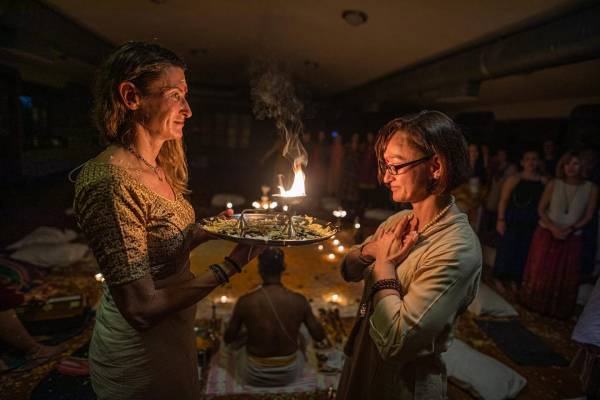
The second memorable moment occurred during aarti. As I nervously approached my teacher who was holding the camphor lamp, I paused; she smiled and said, “step into the fire”. Stepping closer, I cupped my hands, waved them over the flame, swept them over the crown of my head, cupped them over my eyes, and rested them over my heart. The chapter titled “The Lady Twilight” from Dalrymple’s Nine Lives, Manisha states, “It is within you that you find the loving shakti of the Mother. This is the place for its realisation, for illumination.” (202). It was then that I realized that part of my Svadhyaya has been to reclaim my own creative power and energy of the divine feminine which had been suppressed in order to rely more on masculine energy as a means of self-preservation.

The Pradakshina

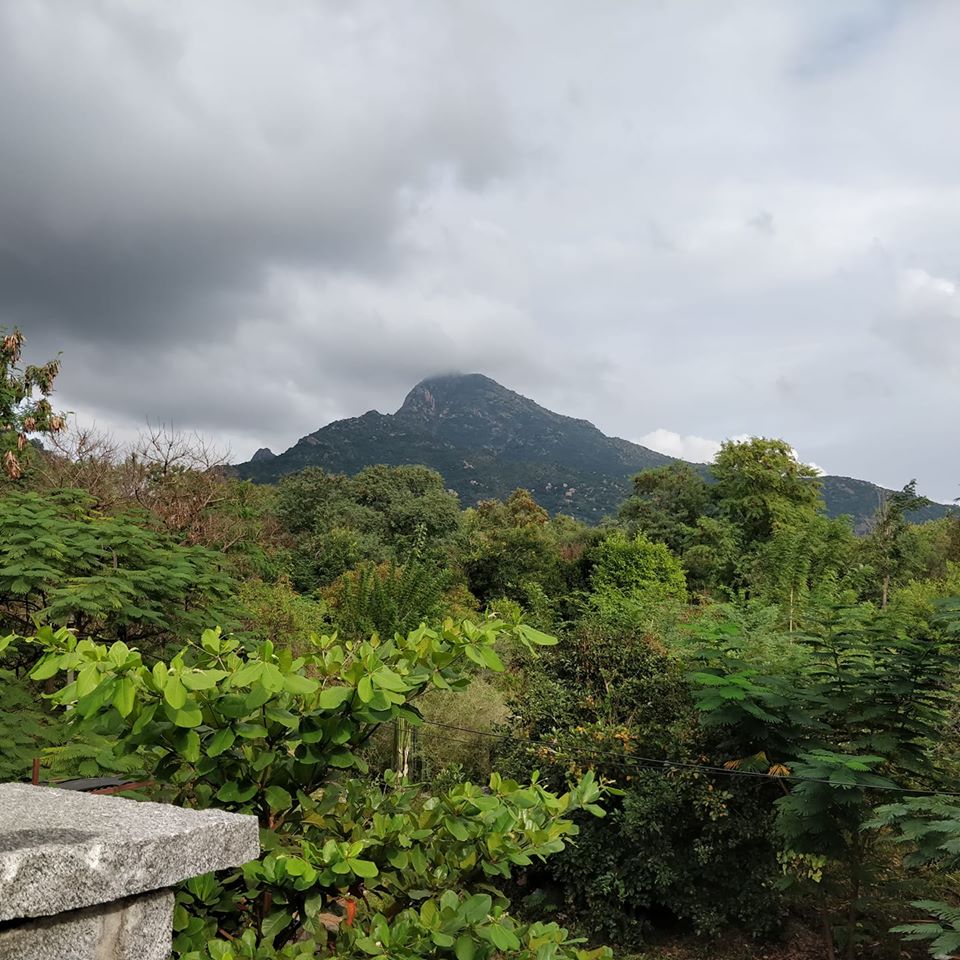
mt aranchala

The Niyamas were really evident to me in the early morning pradakshina (circumambulate) around Mt. Arunachala. The approximate 8-mile hike around the mountain through the town of Thiruvannamalai revealed India’s finest of all treasures – its people. I found myself straying from the group as “[o]ur seeing is limited by all the groups that shape us, as well as by our experience.” (Adele, 51). Unbeknownst to me at the time, the hike evolved into a walking meditation. I was indeed content with not seeking but witnessing reality (Santosha). With each and every passerby, I made an intention to connect without judgments, expectations, or assumptions. To truly see one another and be seen,

“[w]e learn compassion as we dissolve our personal version of the world, and grow gentle eyes that are not afraid to see reality as it is.” (37).

Similar to darshan, “it [is] the exchange of vision – the seeing and the seen.” (Dalrymple, 185). For me, it was also a practice of Svadhyaya (self-study). Each greeting was so powerfully moving: an exchange of reverence, respect, and honor leaving me deeply humbled and so very grateful. It reminded me of Kanai’s statement in “The Song of the Blind Minstrel”,

“The joy of walking on foot along unknown roads brings you closer to God. You learn to recognise that the divine is everywhere . . .” (237).

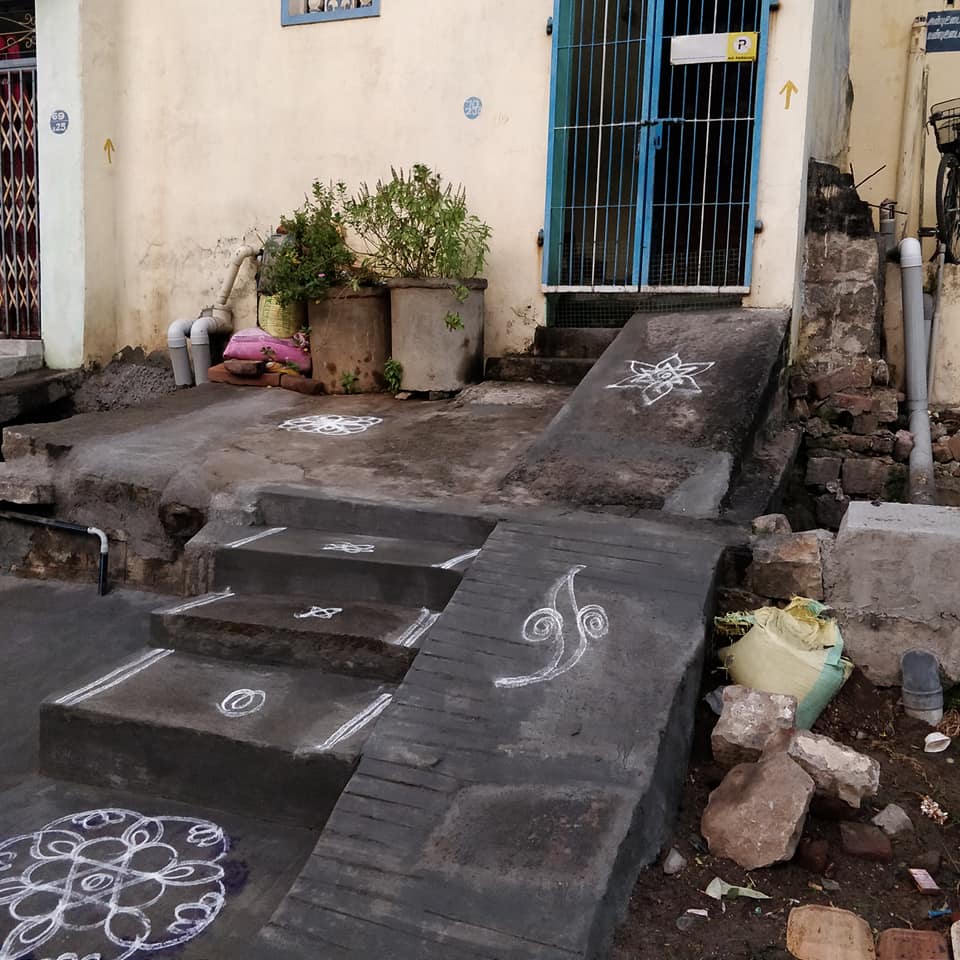
rangoli

And the divine was indeed everywhere. As the sun rose over Mt. Aranchala, the quiet streets gradually became more alive with people, cars, tuk-tuks, motorbikes, dogs, chickens, and, of course, cows. Of all the activity, one common practice stood out: the early morning ceremony of women sweeping and washing the entrances to homes or businesses, then marking colorful rangoli patterns on the doorsteps. It also brought to mind Dalrymple’s account in “The Maker of Idols”, “Farther up the street, the girls of the village were busy sweeping the fronts of their houses and making rangoli patterns with rice powder on their doorsteps.” (176). This seemingly basic ritual revealed many of the Niyamas: the cleanliness of Saucha, contentment of Santosha, daily self-discipline of Tapas, and the devotion of Ishvara Pranidhanna. Upon further research, the rangoli inspires strength, generosity, and it is believed to bring good luck. Despite the mishap of stepping in cow dung and the huge, painful blisters on the backs of my heels, I was truly honored for the opportunity to witness not only the Niyamas in action but how they created a sense of sacredness in the community.

Darshan at Brihadeeswara Temple

temple

The sense of sacredness in community was evident during our various temple visits. Of all the temples, the Brihadeeswara Temple in Thanjavur was the most memorable – also described in “The Maker of Idols” of Dalrymple’s Nine Lives. It was a bright and warm mid-morning with a moderate gathering of people. As we entered through the South gate, we set aside our shoes and proceeded through the Gopurams to join the procession, passing the Nandi who stood guard in front of the Sri Vimana sanctum. Many people scurried to find a place in line between the interlocking metal sanctions used to que the flow of people for darshan. The incense was fragrant and created an air of auspiciousness. In fact, the incense used in temples often follow the Ayurvedic principles in which the ingredients derive from the five elements. IMG_20200104_093413

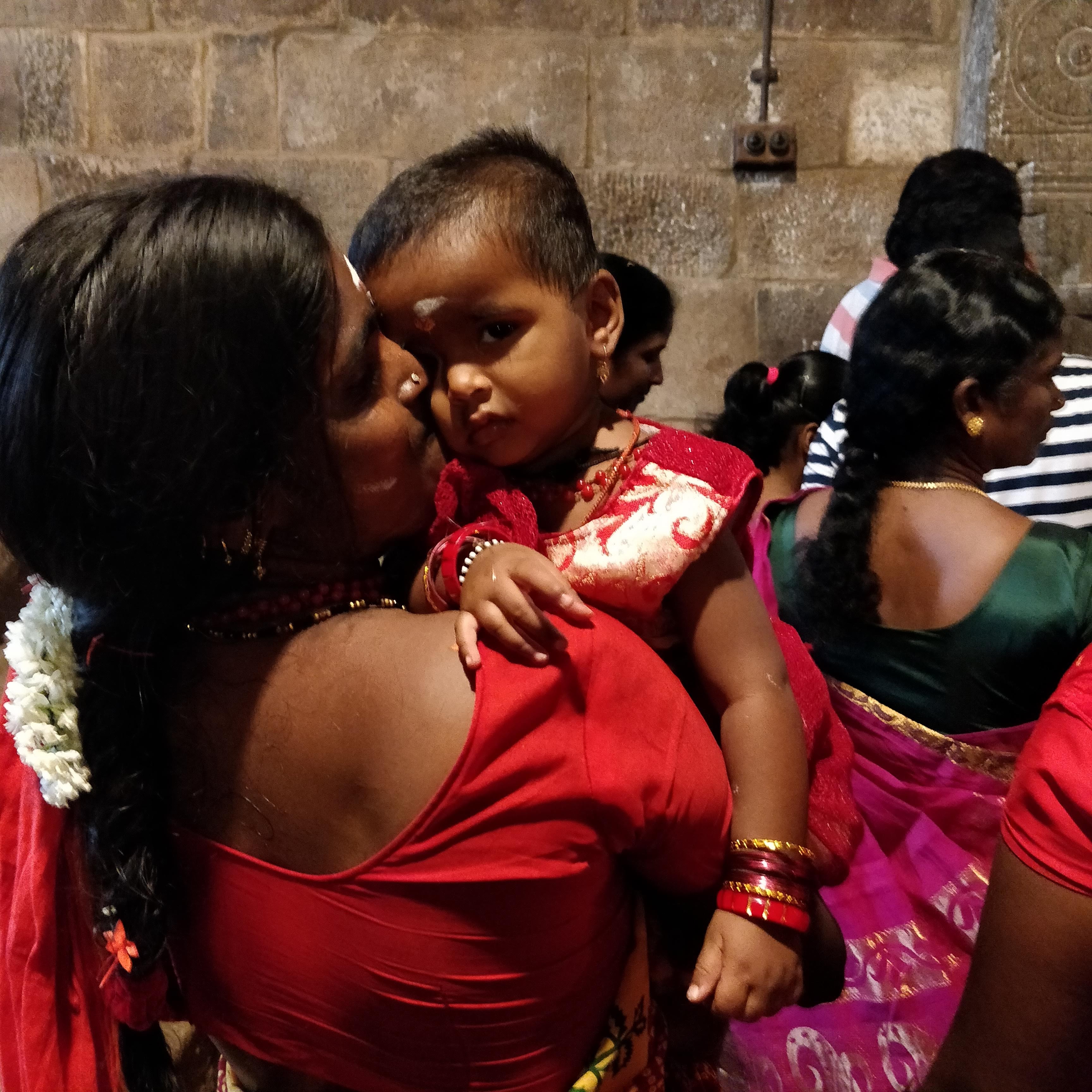
While it was warm outside, it was definitely cooler inside the sanctorum. Unlike many of the other temples we had visited, Sri Vimana was devoid of a lot of artificial lighting. The limestone under my bare feet was cool and smooth while my eyes took in the array of brightly colored saris and lungis. In front of me was a woman holding her little girl who appeared in need of a nap. In “The Maker of Idols”, Srikanda states,

“All these people have a lot of worries – about money, about family, about work. But when they come to the god in the temple . . . for a while their problems vanish and they are satisfied.” (178).

As the procession slowly made its way towards the inner sanctum for darshan, all who waited were hopeful and grateful. According to Dalrymple, darshan is “to actually see the beauty of the divine image, and to meet the eyes of the god. The gaze of the bronze deity meets the eyes of the worshipper . . . that acts as a focus for bhakti, the passionate devotion of the devotee.” (185). Our teacher’s reminder to focus on the deity, not the priest performing tilaka, replayed itself in my mind as I approached the viewing area.

The Search for Sacredness

79532366_10157274687778995_7912682119879458816_n

Photo Credit: Wari Ananda Om

Srikanda believes that “Without murti (statute of idols), there could be no puja, no temple, nowhere for people to come with their prayers and their problems.” (178). Perhaps, he’s right. However, the lives I witnessed both in and outside of the various temples we visited, revealed a people who value community and sacredness. According to Adele,

“It was time to return to the community, guiding and supporting the community with the inner wisdom that had been attained.” (52).

Throughout our pilgrimage, we were frequently invited into the community in various ways. Some stepped aside for us during darshan. Many fearlessly inquired as to where we were from. Mothers encouraged children to take photos with us. Many people requested “selfies”. Most were welcoming with smiles and greetings. Most made eye-contact. Meals were shared. Heads were bowed. Añjali Mudrā was offered. Om Namaḥ Śivāya and Namaste were uttered and exchanged.

81434939_10157271878028995_6478869496416174080_n

Photo Credit: Wari Ananda Om

Despite being a third-world country, the people of India were gracious and generous with sharing their inner wisdom. Ultimately, I was afforded an opportunity not only to see Patanjali’s Yoga Sutras in action but also

“to see the sacred in the ordinary and the ordinary in the sacred.” (82).

Like Dalrymple’s text accomplishes, I, too, found the sacred in modern India among its people. With every gaze that was met, I found divineness without as well as within.
Om Namaḥ Śivāya🔱🙏


Works Cited:
Adele, Deborah. The Yamas and Niyamas: Exploring Yoga’s Ethical Practice. On-Word Bound Books: Duluth, 2009.
Dalrymple, William. Nine Lives: In Search of the Sacred in Modern India. Vintage Departures: New York, 2011.
Chanting: Yoga of the Heart

Posted: August 2, 2018 in YTT Reflections

DSCF5743I was first introduced to chanting in 2011 at the Midwest Yoga Conference organized by my first teacher, Jonny Kest. Still relatively new to the world of “yoga” and prior to my initial 200-hour teacher training, I was intrigued with chanting. One of the reasons may be linked to my personal history with singing.

I had been in choir throughout my elementary, middle school, and high school years, but my most memorable singing experience occurred under the guidance of Robert Boyd, a truly talented choir director and composer of our choirs at Lyons Township High School.  Under his direction, our class of 1989 Varsity choir became renowned for our ability to break into various parts – some compositions requiring 12 parts, our ability to harmonize, and our ability to tackle difficult compositions – including various foreign languages.  One of my favorite and memorable pieces was Charles Stanford’s “Beati Quorum Via” which was 6-parts entirely in Latin. Even without knowing what the words meant, we had an “intrinsic” understanding and could “imagine the energy permeating every cell of our being” every time we performed it (Girish 99, 167).  I still hold sacred a cassette tape recording of our candlelight choral performance at a local church. While I may not possess the device necessary to the play it, the music remains vivid in my mind and in my heart. It has indeed permeated my being that almost 30 years later I can still sing it.

DSCF5626In 2011 at the conference, twenty-two years later, the feelings and sensations experienced as a singer in choir were rekindled as Janet’s Bhakti/Kirtan reopened those very experiences I had those many years ago: surrounded by those who willingly and without reservation shared their voice to create a community full of sound and vibrations. However, rather than the heavy regimen of “perfect practice” from the choral experience, we were simply offered an opportunity to “feel and enjoy an embodied experience of the peace, love, and wisdom within” (87, 139).

Singing with a group comes relatively natural to me, but it was also safer. After a harrowing experience, my first solo audition became the end of my ever becoming a soloist. I barely trusted my choir director enough to audition for Girl’s Choir and Varsity Choir, thus I could never bring myself to sing alone in front of others. Despite being a yoga teacher since 2011, it has only been in the past two years that I have been courageous enough to incorporate chanting into the classes I teach.  What started with closing my classes with three rounds of Om, gradually evolved to incorporate more elaborate chants that were more or less dictated by the moment. As suggested by Janet, I began small and started to incorporate more as students became more comfortable. Frequently, I often find myself singing solo as some still choose to listen rather than participate. As such, I have to conquer my fears, and I allow myself a opportunity to ground and connect with my breath and my heart beat.

DSCF5583As I continue my journey, I have noted the healing qualities that yoga and singing has provided for me.  Unbeknownst to me at the time, singing was healing as Dr. Hansen’s “Taking in the Good” outlined by Girish as “HEAL.” (97). I always had a positive experience in practice and in performance, and this experience was enriched and extended in so many ways, to include life-long friendships.  Together, we absorbed the energies and qualities of the experience to provide phenomenal performances that not only the choir experienced, but also the audience. It is only upon reflection of this course and the reading of Girish’s Music and Mantras that I have noted the final step of the healing process: “link positive and negative material.” As the old adage states, “hindsight is 20/20”.
One of the more elaborate chants that has always moved me personally is “Hanuman Bolo” – often moving to me tears. Hanuman embodies supreme selfless devotion, strength, courage, and humility in the absence of ego, qualities that I have either discovered within myself or am still seeking to find. Considering my transition to singing in front of others, even a cappella, did require strength and a hell of a lot of courage!  As a survivor of child abuse, I have a lot of fears, to include the fear of change; now “Hanuman Bolo” immediately comes to mind whenever I need to take a “leap” into the unknown.

DSCF5685Since this training, chanting has become much more embedded in my practice in that no practice is complete without it; I frequently find myself completing ajapa mantras to close out my own practice in other classes, and I never end any of my classes without at least a few rounds. I also want to integrate the Surya Mantra into my own practice then possibly into my classes. While I currently sing a cappella, I would also like to start incorporating some droning using my shruti box and, possibly, one day, the harmonium.

Photo Credit: Sanjin Kastelan

Work Cited:

Girish. Music and Mantras: The Yoga of Mindful Singing for Health, Happiness, Peace, and Prosperity. New York: Atria, 2016.


closed lotusBackgound

The fall of 2005 was a truly devastating turning point in my life: my dearest father lost his battle with Non-Hodgkin’s Lymphoma – attributed to his exposure to Agent Orange while stationed in Vietnam.  It was a rough summer leading up to his passing as my mother was also diagnosed with breast cancer. My son, Jace, was a rather difficult 2-year-old at the time as I was helping to care for my parents who lived 2-hours away while also maintaining a full-time position as a high school English teacher.  After my father’s passing, I returned to college to obtain my Master’s Degree. Unbeknownst to me at the time, I was flinging prana in every direction. My father’s passing projected me into taking on more responsibility in an attempt to cope with the loss. Needless to say, I was devastated and sought comfort in being “busy” – too busy to think about it – what Levine would term as “hypervigilance” (Levine 155).  Indeed, my life was a “giant elastic-band ball” (Stone 73).

In hindsight, this “hypervigilant” path lead me to a path of healing.  I was so busy that I had abandoned my home exercise routine – courtesy of The Firm – and sought refuge in a local yoga studio.  When I first began practicing yoga in 2005, my intention was solely external – to get back into shape. However, this gradually shifted and yoga had become so much more – it became a restorative, healing practice of self-love as well as a means to regain control and maybe loosen those rubber bands. Fast-forward to 2011 when my husband encouraged me to take advantage of a summer-intensive yoga teacher training: my sole intention was not to teach others but to enhance my own practice. So, I set aside my doubts and fears in order to complete the training, and as a result, my svādhyāya truly began. The journey continues thirteen years later as I share my practice, as well as attend classes, festivals, retreats, and trainings.  Overtime, my elastic-band ball has diminished in size.

partial open lotusMy Ahaṇkāra of Dvesha

I am a survivor of child abuse and neglect; the abuse I suffered at the hands and from the words of my mother was not only physical, but also psychological. In Levine’s Waking the Tiger, I suffer from Developmental Trauma.  According to Levine, “Traumatic symptoms . . . stem from the frozen residue of energy that has not been resolved and discharged; this residue remains trapped in the nervous system where it can wreak havoc on our bodies and spirits.” (19). This was evident in many aspects of my life which became my ahaṇkāra: fear of becoming an abusive parent, fear of change (no matter how small and insignificant), fear and distrust of others, fear of loving and being loved, feeling unwanted, untrustworthy, undeserving, and unimportant.  I was even afraid of my own voice (Levine 151, Stone 145). Despite being in choir all through high school, I refused to sing a solo and participate in auditions since my mother’s degrading comments after my first performance in grade school.

On a family trip to Colorado, I remember having my palms read – the reader stated, “You been through this life many times.”  Being 7-8 years of age, I was ignorant as to what she meant, much less able to confirm its validity. However, these words have been ingrained in my mind ever since, and have affected the great shift in my perspective from anger and shame to immense gratitude: these experiences of suffering have contributed to making me who I am today: forgiving, empathetic, compassionate, and loving. In fact, it became my purushartas – “[t]hat difficulty is also our potential for liberation.” (Stone 81).  After all, “no mud, no lotus.” However, it’s also interesting to note that if I have been through this life many times, my samskara apparently runs deep.

journeySvādhyāya

According to Levine, “Body sensation, rather than intense emotion, is the key to healing trauma.” (12). Over the years, yoga has been instrumental in helping me to reveal and transform the deeply-embedded traumas of my childhood.  Through the many years of practice, I have learned a lot about myself as the “decades”, maybe “lifetimes”, of suppression and these conditioned patterns surfaced in my practice – my fear of inversions, my difficulty with backbends, a general distrust of my intuition, and even the fear of my voice – all spilled out and exposed on my mat (Levine 149, Stone 21). Through the continued practice and various trainings, yoga became a “transformative” way of life for me (Levine 1); Stone refers to Freud’s “the return of the repressed.” (Stone 73). In fact, I began to identify with the ebb and flow of sensations as “compressed energy” that I have held onto for so many years as they were revealed in my practice (Levine 76). I recall struggling through various asanas in the very beginning, being ego-driven to simply accomplish the posture in the basest physical form.  Years later, I was able to connect these sensations with the developmental trauma of my childhood.

According to Levine, “. . . the solution to vanquishing trauma comes not through confronting it directly, but by working with its reflection, mirrored in our instinctual responses.” (65). This quote stood out to me the most: while I have participated in numerous counseling sessions throughout my adolescent years, the true healing occurs on my mat. When I set aside my “ahaṇkāra” (the “I-maker” composition rooted in my traumatic experiences), I try not to focus on the end goal, but on the single, fleeting moment, and how I respond or react to each one physically and mentally – “it becomes a practice of finding within ourselves freedom from being caught in impermanent and limited situations.” (Stone 27, 99). Almost every time I come to my mat, something new is revealed; under the right guidance, an inner freedom is opened or released in the form of an inversion, a back bend, or even singing.  It is through these experiences that I also became aware of how my sense of self was heavily based on past experiences and how new information was filtered through that previously determined sense of self (121). Indeed, yoga has become my adaptive process allowing for the gradual renegotiation of the “sheaths of memory” relating to the traumas of my lifetime, and quite possibly the traumas of lifetimes before.

The Tapaslotus 2

Janet’s equating the sequencing of one’s practice to that of a story was rather curious since “narratives are only ideas” that, according to Stone, “the practice is to move beyond the story line and to stay, with acceptance patience, and curiosity with the changing sensations that appear from moment to moment.” (139, 173). However, Janet’s extended metaphor also really spoke to me as an English teacher; I can visualize the “exposition”, “rising action”, “climax”, “falling action”, and “resolution” in the construct of a class. The exposition is to “expose” or reveal what is already there: characters are introduced and relevant background is provided.  As a student/teacher, I always begin the practice with a few moments of complete stillness to silence the mind (savasana, danda pranam, child’s pose, a yin pose, or seated meditation). According to Michael Stone, “the present moment begins in silence” and “everything is crafted out of silence.” (7, 125). In this physical stillness, I focus on what’s already there – in that moment – bringing my attention to the points of contact with Prithvi (earth) to help me ground, then drawing my attention to the Prana and Apana Vayus to enhance my focus and gauge my energy level.  In this physical and psychological stillness, the patterns of grasping and inflexibility are revealed (9, 125).

The “story” continues to unfold with the “rising action” – connecting with Apas (water) as I find more fluidity in movement while maintaining a connection to the earth and to the various Vayus as I draw in, ground, circulate, rise, and emanate energy.  Beyond the postures, the practice is purely a “technique of moving the body into pure feeling and then dissolve the mind into that deep experience of feeling.” (11, 125). In fact, “the posture sequences open up different layers and movements of mind and body” (118).  As the connection between mind and body begins to solidify, I also try to find the balance between steadiness and ease, effort and non-effort. As the Vinyasa flow sequence builds to become more rigorous, Angi (fire) is ignited as the “climax”, and a dramatic shift in the story occurs towards intuitive expression: spurring the creative energy of nirodha by offering an opportunity to tap into one’s intuition by allowing one to alter the sequence by adding, deleting, modifying, or varying postures as intuition dictates. Throughout the flow, there are moments of “staying in the tension of opposites” as I will pause to notice “the patterns and disruptions of breath, the nervous system, the heart rate, the feeling tone” in the physical body – again noting my physical and emotional responses (77, 126, 138).

This energy culminates in the “falling action” of the story – generally in an inversion, followed by a yin or restorative posture to provide an opportunity to connect with Akasha (ether) by creating a space of stillness to pause, to listen, to observe, to notice, as “stillness becomes nothing other than a contented mind that is open and receptive, sharp and still,” – to “sit in the midst of opposition creates the heat necessary for change” and to embrace “the energy of the moment rather than with our storytelling” (11, 78). The “resolution” portion of the class ends with savasana as an opportunity for one to surrender into the infinite – īśvara praṇidhāna.  Even in my own practice, I like to begin in stillness and end in stillness – bringing the practice full-circle much like the “life-death cycle of the breath” (34). This stillness is also an opportunity to ““sit with what is arising from moment to moment with acceptance and patience, steadiness and ease” – to go to a deeper level to reflect on what was revealed, released, and/or transformed to “bring about a fundamental shift in perception” (92-3, 116, 127). It is here that one’s true “narrative” arises free of the presuppositions of the old narrative – through an intimate and interior awareness of one’s authentic self and one’s interconnectedness with everything – after all, “[t]here is a whole universe even within one breath cycle” (128-129, 137, 142, 168).

Sankalparocks

The lessons I have learned in my practice extend well beyond the four corners of my mat – indeed it infiltrates throughout many aspects of my life (173).  Over the years, I have become better able to concentrate, more tolerant of change, less reactive to chaos, and more aware of my physical and mental responses – indeed, I am beginning to find comfort in discomfort (128, 143, 145).  I am a better mother, wife, friend, teacher, human being. But, as with most journeys, this one continues. There are still moments when I cycle back through the samskara of habits and reactions of the old narratives as I continue to work on “. . . cultivating a kinder and more compassionate story to break down the tendency toward self-judgement.” (Stone 84). But perhaps cycling back is not necessarily a bad thing, but an integral part of the journey because “. . . they are the details and encumbrances that we’ve struggled with most, know most intimately, and have learned how to wrestle, restrain, and transform.” (48).  Shifting my perspective has helped me with vidyā – with being with what is (89). But the work is far from complete as I continue to create space in my relationship with myself (179). After all, the most difficult relationship we have is the one we have with ourselves.

Works Cited
Levine, Peter A. Waking the Tiger: Healing Trauma. North Atlantic Books: Berkeley, 1997.

Stone, Michael. The Inner Tradition of Yoga. Shambala: Boulder, 2008.


5-Elements

Posted: January 11, 2017 in YTT Reflections

Upon reflection of the JSYTT in Mexico and the required readings, I have been able to build, deepen, and incorporate a better understanding of the 5 elements into my practice and teachings.  At the same time, I also have so much more to learn.  Below is what I have been able to “glean” thus far.  In my deciphering of the phrase “brief reflection,” I have opted to detail how I have attempted to incorporate the knowledge gained from the training and readings into my teachings – which are a reflection of my own personal practice.  I am going to exercise “santosha” and be completely content with the following submission.

15284915_10154188949063995_5174527075601196233_nThe Internal Practice:  Establishing Sacred Space and Connecting with the Inner Divine

The practice begins by creating a sacred space that enables students to feel safe in their own bodies.  According to Michael Stone, “The body is the best place to begin to reconnect with reality, because it is right here all the time.  We need not make a pilgrimage any further than the felt body at this moment.” (146).  In this safe space, we are better able to “engage ourselves completely with our human characteristics and to accept the whole of what we are.” (Odier 41).  In either a seated or reclining meditation, students are guided to observe the parts of the body that are in contact with the earth (back of the head, shoulders, elbows, wrists, sacrum, hips, thigh, calves, heals, etc.) as“[w]e open to experience from a place of stillness.” (Stone 6).  Students are directed to practice equanimity (upeksā) physically in order to set aside their ego and expectations; to accept their limitations; to accept themselves exactly as they are at that given moment (49).  It is also an opportunity to set aside those habitual “stories rooted in fear [that are fueled by] greed, anger, and confusion.” (89).  As the body settles, the “monkey mind” tends to come alive . . . rather than fight these distractions (citta vŗitti), students are cued to allow them in, and imagine letting them go on the exhale.  By beginning in this space of self-love and self-acceptance, “the restoration of intimacy through body, mind, and heart” better enables students to connect within as “. . . the divine is at the very heart of the awareness of breath, sensations, emotions, and thoughts.”  (Odier  42,148; Stone 14).  After all, “[w]hen we are safe in our own bodies, we have a ground from which to step out into the world” – in the practice, we are mentally prepared to step out onto our mats (Stone 155).

Students are then directed to notice those parts of the body in contact with the Air (Vayu) element (crown of the head, back of the neck, low back, behind the knees and ankles, soles of the feet, and the entire front body).  Students continue their journey inward by connecting with Air element through their breath – first through observation:  observing the length, depth, and breadth of each inhale and exhale; observing any natural pauses.  By “[r]eturning to the arc of the full inhalation and exhalation, the mind comes back to neutrality, back to the present experience.” (14).   By deepening the breath, students are cued to fill the belly, allow the ribs to expand and the heart to rise on every inhale; to allow the back body to ground and grow heavier while allowing the front body to soften, drawing the naval towards their spine on every exhale.  As students begin to create their own rhythmic breathing pattern, the external practice begins with subtle movement as the students begin to sync their movement with their breath – cuing inhale (prāna) to expand and lengthen, exhale (apāna) to soften and release (17, 34).

15202554_10154188948838995_2432527242750327896_nThe External Practice: Sun A, Vinyasa, and Yang Sequences

The external practice continues with a warm-up sequence where students are cued to engage ujjayi pranayama and core activating postures to incorporate the Fire (Angi) element.  Guided first through Surya Namaskara A or similar variation, students are reminded to ground those areas of the body in contact with the earth (hands, feet, toes) to include their drishti.  Students are also reminded to stay connected with the air through the breath as they continue through the flow on their own while I hold the space and offer support as a guiding observer (Stone 158).  The Water (Apas) element is incorporated with the fluidity of movement as students transition from one pose to the next – creating a flow: “[l]et us be like the wave that accepts its pathway, it strength, its weakness, its freedom, the absence of choice.” (Odier 28, Stone 34, 40).    These reminders to connect to the elements are reiterated as the Vinyasa flow is introduced in 2 to 3 segments with subtle verbal and tactile adjustments, as well as modifications and variations.  The element of Ether (Akasha) is then introduced in the pauses between the postures and between the segments of the sequence.  As the sequence is built in 5-6 posture segments, students are cued to “expect the unexpected” as additional postures are introduced or a sudden shift in perspective takes place (from top of mat to side to back of mat) – oftentimes in the middle of previous segments serving as an opportunity of “seeing reality as a contingent and impermanent flow.” (Stone 108, 142).  This provides the students an opportunity to break the habitual pattern that they have developed for “[i]f the practices are to be vibrant and challenging, they must also interrupt the habits . . . .” (105).  This experience also serves to build “a trust in the complexity of life” – to “live as the water and function as the wave.” (87, 128).  Once the flow is established, students are released to drop deeper into the flow on their own providing them with an opportunity to be creative, to apply their own modifications and variations – an opportunity to connect with their Heart Sútra – to be “light, random, and uninhibited.”  While students are flowing on their own, I will introduce the Ether (Akasha) element by having students intermittently pause before transitioning to the next posture.  In these pauses, students are reminded of their connections to the 5 elements; it also serves to interrupt their “habit” – symbolically reflecting reality to be in constant flux.  To close the warm-up sequence, students are invited to elevate their practice with the air element by taking an inversion they can safely execute for 10 complete yogi breaths.

Students are then directed to child’s pose or seated meditation to return to the complete yogi breath before being introduced to the yang sequence.  The yang sequence is anywhere from 1-3 postures (standing or seated) that are held for longer periods and engage every fiber of their being.  Here the elements of Earth, Air, Fire and Ether are emphasized:  Earth for grounding and rooting down those points of contact with the earth; stoking of the Fire not only through the breath, but also the muscles that are actively engaged in each pose; Air as students are directed to breathe through the hold as they maintain the space (ether) while holding the posture(s).  It is within Ether that “[w]e reach toward the infinite and we touch the heart, we come back toward our center and touch the infinite space.” (Odier 26).  By guiding students to notice the “attachment (rāga) and aversion (dvesa)” they encounter in these difficult asanas, they are encouraged to move into the uncomfortable in order to “open to an answer or any other strong feelings and not take immediate action” – to indeed, wait and see (Stone 13, 33, 51).  Students are also encouraged to let go of the effort in order to embrace the moment for “[e]ffort must relax for intimacy to appear” (34).  It is another opportunity to practice equanimity – “[e]quanimity (upeksā) is not a silent witnesses of our psychic lives but an opening toward what is.”  (49).

15232273_10154188953068995_2101184671533479779_nInternal Practice:  Yin Sequence and Savasana

As a transition from the external to the internal practice, students are lead through a yin sequence of 2-3 seated yin postures.  Since these postures require no muscular energy, they can bring the student back to an internal practice.  These restorative postures are longer holds that compliment the active asana practice.  Students are guided through the 5 elements as they relate to each the posture.  Here students may be guided to a symbolic representation of Spandakarika:  “the sacred tremor is the way in to this new manner of seeing and feeling things.  This is not a mental process, but a dynamic that engages both the body and the mind.” (Odier 19).  The sacred tremor can be symbolically represented in the waves of sensations the students notice in these static holds.  Here, students are encouraged to find stillness within the “tremors” that arise; to stay connected to the breath as the sensations ebb and flow like waves; to practice equanimity; to practice “limitless, formless space” (43).

Bringing the practice full circle, students return to the point in which they began . . . stillness in space (ether).  It is in savasana “corpse” pose that “. . . we do not slip into nothingness – we slip into existence.”  (Stone 165).  Here, Kundalini can be alluded to that “which unfurls from the heart and permeates the totality of space, is quite simply absolute love.” (Odier 43-44).  This spherical reference serves as a reminder that the world appears within us, and “the Divine is he who perceives the world, for he perceives only the reflection of the divine within him.” (17, 42).  In savasana, we surrender to the moment; we let go of our need to control; we accept the present moment; we open to absolute love; we experience joy (28).

Closing15170767_10154188953278995_3412671107087948037_n

As I direct students out of savasana, I briefly return their attention to the 5 elements; first air by taking a complete yogi breath; the earth as they notice the heaviness of their body grounding into the earth; the fire of their inner divine light ignited by the practice; the water as they begin making subtle movements; and ether as they pause on their side in fetal pose in a moment of gratitude.  Upon rising into a comfortable seated position, I close the class with a few rounds of a chant – which has not only been a throat-opening experience for me and my students, but a heart-opening one as well.

15171315_10154188940868995_3229683502583290595_nFinal Observations

What is truly amazing about these elements is their interconnectedness; all are essentially formless and limitless in nature.  It is possible to experience this interconnection within ourselves in our practice:  “[p]ractice awakens the dormant and often invisible interiors of mind, body, and heart in order to establish a more tender, responsive, creative, and active self.”  (Stone 13).  And as it nurtures within us, it also radiates beyond us . . . beyond the four corners of our mat, beyond the four corners of the room as our “[i]nternal practices always flow back out into the world.” (Stone 58).  It moves us not only toward self-acceptance and self-love, but accepting our part in a greater whole . . . as a part of the earth, not separate from it . . . interconnected (samādhi) (21, 25, 50, 89, 93).

If we are open to all of this decisively and without pause, we encounter the world as a part of it. This generates trust and reinforces the truth of being part of a much greater whole. This is no dream, there is no gift to open or heaven to which we must one day ascend; when we arrive in present experience, we come to see that the long carpet of reality is already unrolled. (Stone 25).

I have a deeper understanding and appreciation for the sangha – it is the world of which I am a part because “[a]ll is radiating sacred tremoring – people, mountains, rivers, and emotions.” (Odier 45).  While I could continue with how this training has affected me, my efforts would be futile at this moment.  First, the information from this training continues to evolve in my practice and my teachings.  Additionally, the effects are too elusive to authenticate into words – and I don’t want to limit it with language or to box it into a “story.”  As such, I will close with this:  “The point of ethical practice is that we are reaching out to listen rather than speak, to be touched rather than to touch, to be affected rather than to manipulate.” (Stone 146).  As such, I will continue to listen, be touched, and affected by this and future trainings.

Submitted with much love, light, and gratitude.


Works Cited:

Odier, Daniel.  Yoga Spandakarika:  The Sacred Texts at the Origins of Tantra.  Inner Traditions: Rochester, 2004.

Stone, Michael.  Awake in the World: Teachings from Yoga and Buddhism for Living an Engaged Life.  Shambala: Boston, 2011.