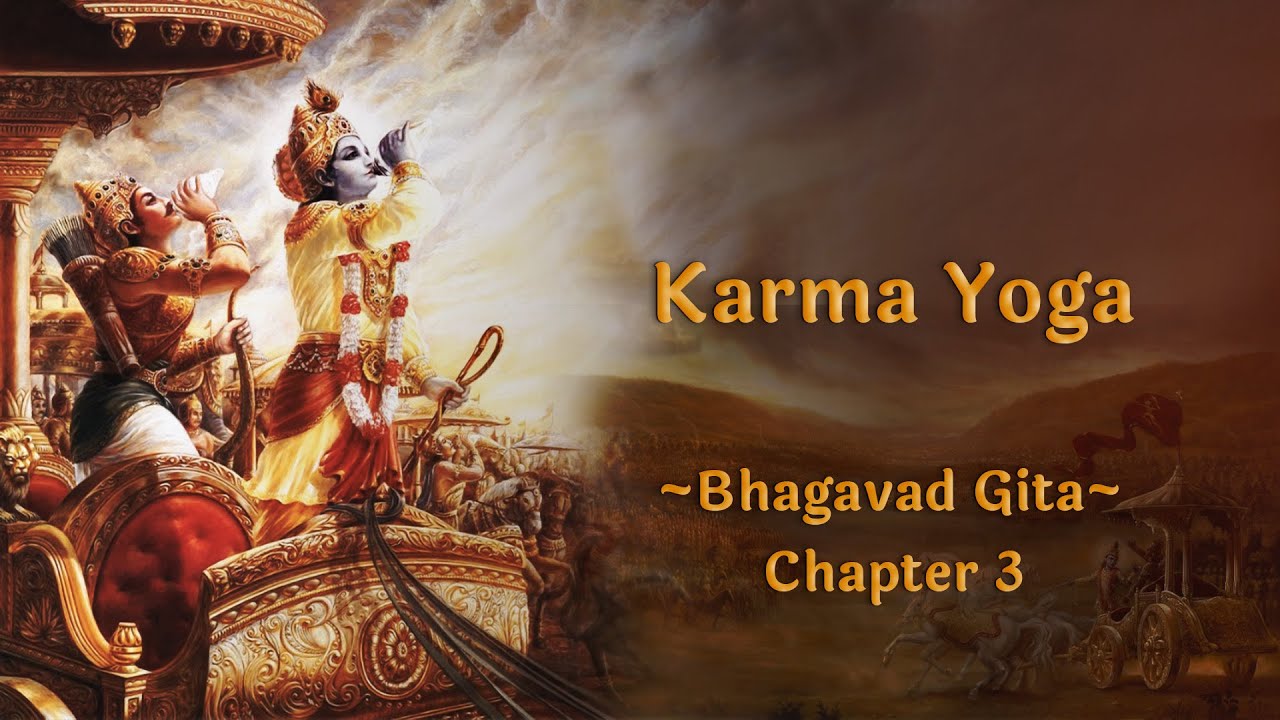
In Chapter 3 of the Bhagavad Gita, Lord Krishna introduces Karma Yoga, the Yoga of Action, as a path to spiritual liberation through selfless action. Krishna teaches that by performing one’s duties without attachment to the results, individuals align themselves with the cosmic order and contribute to the greater good. This detachment from the fruits of action is key to practicing Karma Yoga, where the focus is on fulfilling one’s responsibilities with sincerity and dedication.
Karma, central to Karma Yoga, refers to the law of cause and effect, where actions have corresponding consequences. However, Krishna reveals that by engaging in selfless action, one can transcend the binding effects of Karma. This approach purifies the heart and leads to spiritual growth and ultimate liberation (moksha), as it frees individuals from the cycle of birth and death.
To apply Karma Yoga in daily life, one must cultivate a mindset of dedication, detachment, and selflessness. Performing tasks with full attention and without concern for the outcome, while focusing on benefiting others, transforms ordinary actions into spiritual practices. This shift in perspective helps individuals live more purposefully, aligning their actions with the divine will.
Karma Yoga offers a practical path to spiritual freedom by encouraging selfless action and detachment from results. By integrating these teachings into daily life, we not only contribute positively to the world but also move closer to spiritual fulfillment and liberation.

 Apurva - Yoga with Jenn