
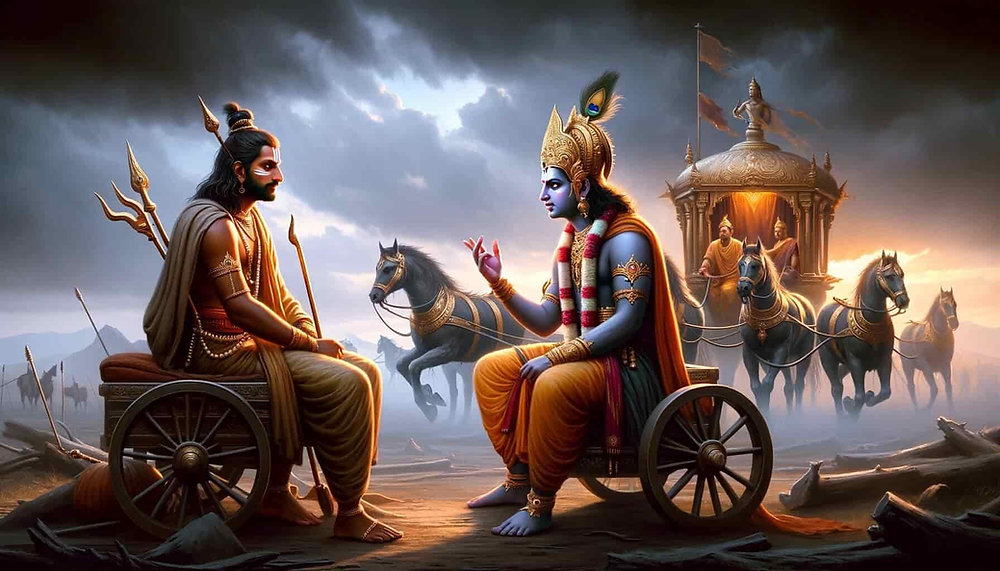
Chapter 2 of the Bhagavad Gita, known as “Sankhya Yoga” or “The Yoga of Knowledge,” brings us some timeless wisdom from Lord Krishna to Prince Arjuna. Sankhya Yoga is all about gaining knowledge and clarity. It’s about understanding the deeper truths of life and distinguishing between what’s temporary and what’s eternal. This kind of discernment helps us navigate our daily lives with a better sense of purpose and direction.
Krishna also explains that our true self, or Atman, is eternal and indestructible. Unlike our physical bodies, which change and eventually perish, the Atman remains constant. This perspective can help us deal with fear and attachment, reminding us that our essence is something far greater than our physical form. In today’s world, this means not getting too caught up in appearances or material possessions, and instead focusing on our inner values and spiritual growth. Krishna emphasizes that our bodies are temporary and subject to change. Understanding this helps us detach from our physical selves and not place all our happiness on something that won’t last forever. In modern terms, it encourages us to look beyond physical health and beauty standards, and instead appreciate the deeper aspects of our being.
Dharma, or duty, is another key teaching in this chapter. Krishna urges Arjuna to do his duty as a warrior, highlighting the importance of fulfilling our responsibilities without getting attached to the results. This is highly relevant today—we all have roles and responsibilities, whether in our families, jobs, or communities. Performing these duties with dedication, but without obsessing over outcomes, can lead to a more fulfilling and balanced life.
These ancient teachings from Sankhya Yoga are incredibly relevant in today’s fast-paced world. They remind us to look beyond the superficial aspects of life and focus on what truly matters. By understanding the eternal nature of the self, we can reduce our fears and anxieties. Recognizing the impermanence of the body helps us shift our priorities from the physical to the spiritual. Embracing our duties with detachment allows us to perform our roles more effectively and find inner peace.
 Apurva - Yoga with Jenn