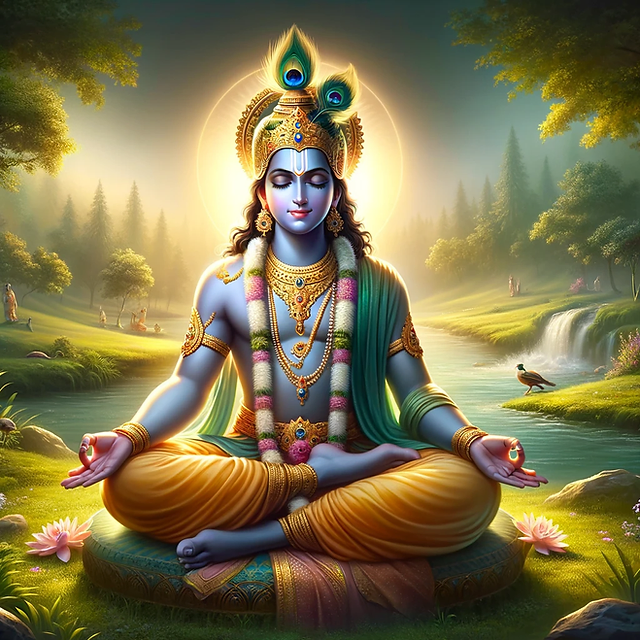
Meditation, as described in Chapter 6 of the Bhagavad Gita, serves as a vital path to inner peace and spiritual growth. Known as Dhyana Yoga, this chapter emphasizes the importance of controlling the mind and maintaining self-discipline. Krishna advises Arjuna on achieving a focused, serene state where the mind unifies with the self, likening the mind to a turbulent river that requires guidance to find clarity.
To prepare for meditation, Krishna suggests creating a calm environment and adopting the proper physical posture, which aids in maintaining alertness and focus. The practice itself involves concentrating the mind on a single point, such as the breath or a mantra, and gently redirecting it when distractions arise. Though challenging, regular practice builds mental resilience.
The ultimate goal of Dhyana Yoga is to reach a state of deep inner tranquility, where the meditator experiences unity with the divine and a profound connection with all beings. Krishna assures that even if one struggles on the spiritual path, their efforts are never in vain, offering reassurance of spiritual progress and protection.
Bhakti Yoga, the path of devotion, centers on cultivating a loving connection with the divine. Unlike other yoga practices that emphasize intellectual understanding or disciplined action, Bhakti Yoga encourages us to approach spirituality with heartfelt love and surrender. In Chapter 9 of the Bhagavad Gita, Krishna explains that this path is accessible to everyone, regardless of background or circumstances. Through sincere devotion, we align with divine grace and find a deeper sense of purpose and peace.
Krishna teaches that Bhakti is about letting go of the ego and offering every part of our lives to the divine. As he says, “Whatever you do, whatever you eat, whatever you offer or give away, and whatever austerities you perform—do that as an offering to Me” (9.27). This teaching reminds us that every action—no matter how small—can be a form of devotion. Bhakti Yoga encourages us to infuse even the mundane tasks of daily life with a sense of sacredness. Whether it’s preparing a meal, working, or supporting loved ones, when done with love and intention, these actions become offerings that bring us closer to the divine.
A true devotee, as Krishna describes, is someone who remains steady through life’s challenges, treats others with kindness, and sees the divine presence in everyone. The transformative power of Bhakti lies in how it shifts our mindset—from focusing on self-interest to cultivating selfless love. This shift not only brings inner joy but also helps us approach everyday interactions with greater compassion and patience.
In practical terms, embracing Bhakti in daily life means finding ways to connect with the divine in whatever we do. It’s about approaching each moment—whether joyful or difficult—as an opportunity to practice love, gratitude, and surrender. Through this perspective, we can find a sense of purpose and fulfillment in the most ordinary moments, turning daily routines into a path of spiritual growth.
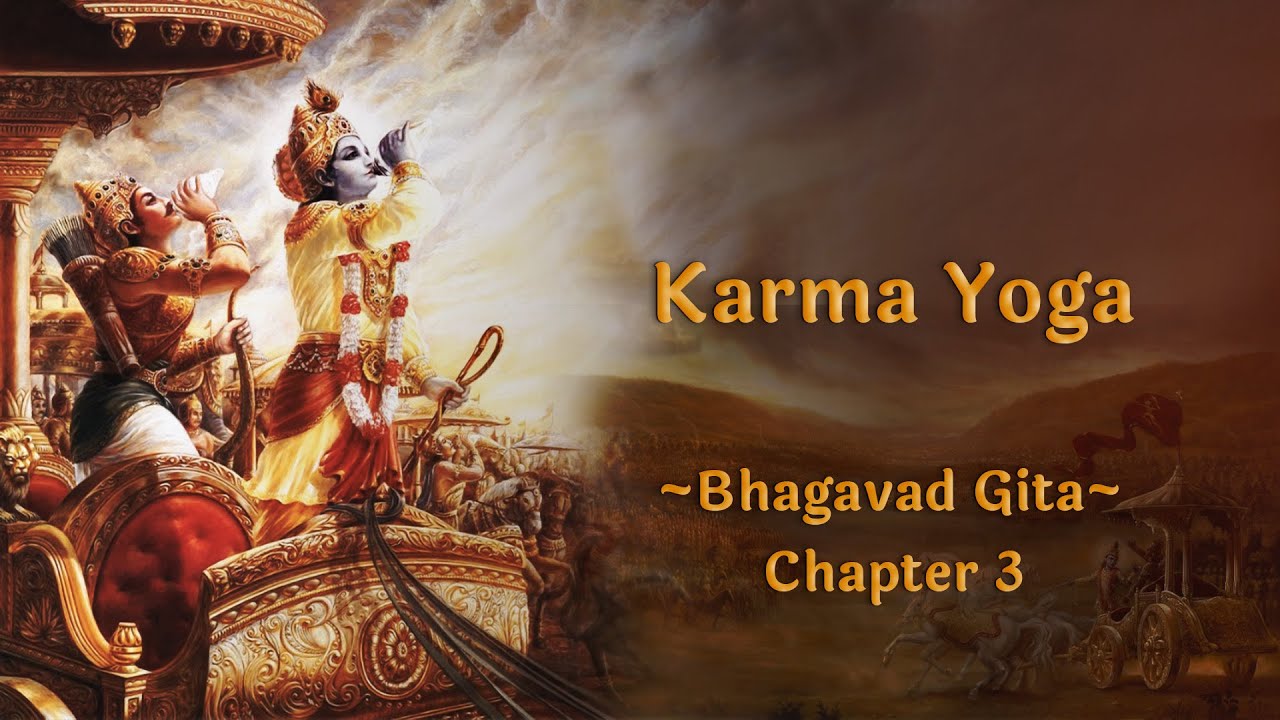
In Chapter 3 of the Bhagavad Gita, Lord Krishna introduces Karma Yoga, the Yoga of Action, as a path to spiritual liberation through selfless action. Krishna teaches that by performing one’s duties without attachment to the results, individuals align themselves with the cosmic order and contribute to the greater good. This detachment from the fruits of action is key to practicing Karma Yoga, where the focus is on fulfilling one’s responsibilities with sincerity and dedication.
Karma, central to Karma Yoga, refers to the law of cause and effect, where actions have corresponding consequences. However, Krishna reveals that by engaging in selfless action, one can transcend the binding effects of Karma. This approach purifies the heart and leads to spiritual growth and ultimate liberation (moksha), as it frees individuals from the cycle of birth and death.
To apply Karma Yoga in daily life, one must cultivate a mindset of dedication, detachment, and selflessness. Performing tasks with full attention and without concern for the outcome, while focusing on benefiting others, transforms ordinary actions into spiritual practices. This shift in perspective helps individuals live more purposefully, aligning their actions with the divine will.
Karma Yoga offers a practical path to spiritual freedom by encouraging selfless action and detachment from results. By integrating these teachings into daily life, we not only contribute positively to the world but also move closer to spiritual fulfillment and liberation.
Chapter 2 of the Bhagavad Gita, known as “Sankhya Yoga” or “The Yoga of Knowledge,” brings us some timeless wisdom from Lord Krishna to Prince Arjuna. Sankhya Yoga is all about gaining knowledge and clarity. It’s about understanding the deeper truths of life and distinguishing between what’s temporary and what’s eternal. This kind of discernment helps us navigate our daily lives with a better sense of purpose and direction.
Krishna also explains that our true self, or Atman, is eternal and indestructible. Unlike our physical bodies, which change and eventually perish, the Atman remains constant. This perspective can help us deal with fear and attachment, reminding us that our essence is something far greater than our physical form. In today’s world, this means not getting too caught up in appearances or material possessions, and instead focusing on our inner values and spiritual growth. Krishna emphasizes that our bodies are temporary and subject to change. Understanding this helps us detach from our physical selves and not place all our happiness on something that won’t last forever. In modern terms, it encourages us to look beyond physical health and beauty standards, and instead appreciate the deeper aspects of our being.
Dharma, or duty, is another key teaching in this chapter. Krishna urges Arjuna to do his duty as a warrior, highlighting the importance of fulfilling our responsibilities without getting attached to the results. This is highly relevant today—we all have roles and responsibilities, whether in our families, jobs, or communities. Performing these duties with dedication, but without obsessing over outcomes, can lead to a more fulfilling and balanced life.
These ancient teachings from Sankhya Yoga are incredibly relevant in today’s fast-paced world. They remind us to look beyond the superficial aspects of life and focus on what truly matters. By understanding the eternal nature of the self, we can reduce our fears and anxieties. Recognizing the impermanence of the body helps us shift our priorities from the physical to the spiritual. Embracing our duties with detachment allows us to perform our roles more effectively and find inner peace.
In the first chapter of the Bhagavad Gita, we meet Arjuna, a warrior prince ready to battle at Kurukshetra. Looking at the enemy lines, he suddenly feels a deep moral and emotional crisis. The thought of fighting his own relatives, close friends, and respected teachers shakes him to the core. Arjuna, once confident, now finds himself engulfed in doubt and fear. This moment sets the stage for his journey from confusion to enlightenment, reflecting a common struggle between doing what’s expected and following one’s personal values.
Psychological and Spiritual Aspects of Arjuna’s Crisis
Arjuna’s struggle goes beyond just fear of battle. His crisis is both psychological and spiritual, mirroring what many of us face when confronted with tough choices. He’s torn between his duty as a warrior and the guilt of fighting loved ones. His mind is clouded with grief and attachment, leading him to question the purpose of life and his role in it. This chapter captures his internal conflict, symbolizing the broader human quest for meaning and balance in difficult times.
The Significance of Arjuna Seeking Guidance from Krishna
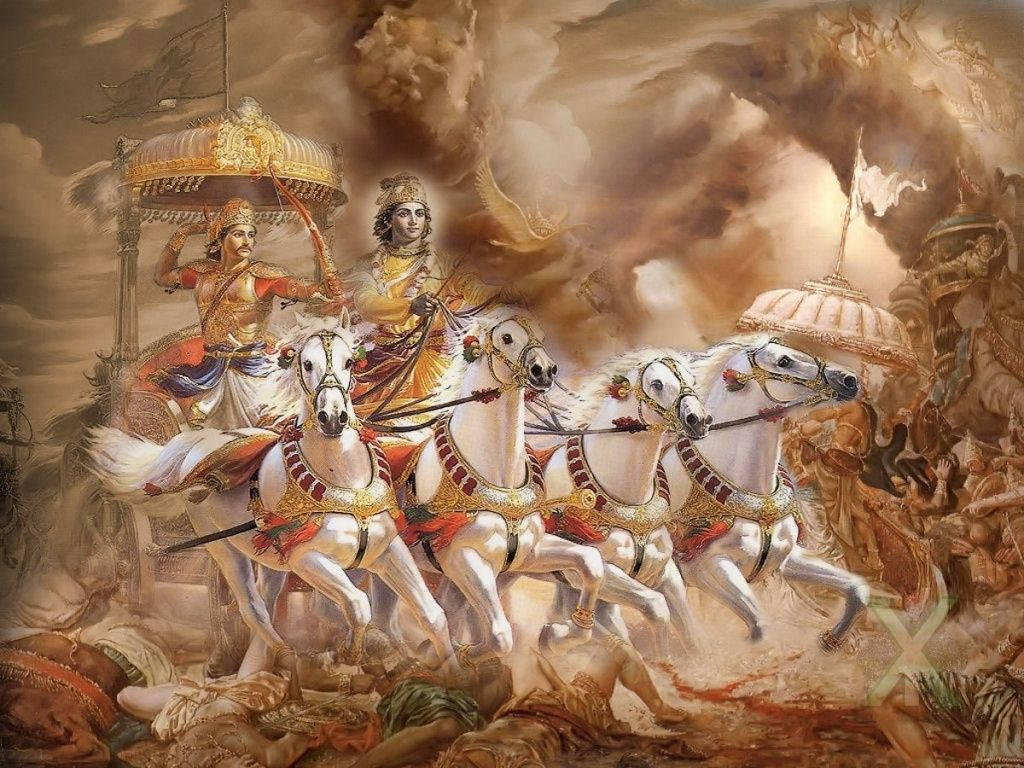
On the verge of breaking down, Arjuna turns to Krishna, his charioteer, for advice. This moment is crucial because it marks a shift in the story. By admitting his confusion and asking for help, Arjuna shows the importance of humility and openness to wisdom. Krishna, representing divine insight and cosmic order, becomes more than just a charioteer—he’s Arjuna’s spiritual guide. This highlights the value of seeking guidance from a wise mentor when facing life’s challenges.
Lessons from Arjuna’s Dilemma
Arjuna’s dilemma and his conversation with Krishna in the first chapter of the Bhagavad Gita offer timeless lessons. They remind us that inner conflicts and tough decisions are part of being human. This chapter encourages us to reflect on our own lives, seek guidance when needed, and look for a higher perspective in difficult situations. Arjuna’s journey from doubt to clarity is a powerful reminder that turning to a higher wisdom can lead to deeper understanding and peace. The wisdom from the Gita continues to resonate, offering insights into duty, righteousness, and finding inner calm.
The Mahabharata, an ancient Indian epic, sets the scene for one of the most profound conversations in spiritual history: the Bhagavad Gita. This conversation occurs on the battlefield of Kurukshetra, where two royal family factions, are preparing for war. Just before the battle commences, Arjuna, a warrior prince, turns to his charioteer, Lord Krishna, for guidance.
The Bhagavad Gita delves deeply into fundamental aspects of human existence, grappling with significant life questions such as the nature of righteousness (Dharma) and the practice of selfless action (Nishkama Karma). Krishna serves as a spiritual guide to Arjuna, offering counsel on multiple paths to achieve spiritual growth. Central to Krishna’s teachings is one’s detachment from the results of actions, “You have the right to perform your prescribed duties, but you are not entitled to the fruits of your actions” (2.47). In other words, we should focus on performing our responsibilities diligently and with integrity, while relinquishing attachment to personal gain or success. By emphasizing the importance of detachment, Krishna invites Arjuna—and by extension, us—to embrace a deeper sense of purpose and spiritual fulfillment through selfless service and righteous conduct.
He also illuminates the eternal nature of the Self (Atman), teaching Arjuna that the Atman transcends the temporary aspects of physical existence. Krishna explains that the Self is indestructible, beyond birth and death, and fundamentally separate from the physical body and mind, “That which pervades the entire body, know it to be indestructible. No one can destroy that imperishable soul.” (2.17). This aims to liberate Arjuna from his fear and attachment, emphasizing a deeper understanding of spiritual identity and inner peace amidst life’s challenges.
Essentially, the Gita advocates for a life of purpose, integrity, and spiritual fulfillment that extends beyond our immediate circumstances. Its teachings offer practical applications, encouraging us in daily life to focus on our actions rather than fixating on results, thus reducing stress and anxiety. These principles foster a deeper connection with our true selves, enhancing both our physical well-being and spiritual awareness.
The Bhagavad Gita is not just an ancient text; it’s a timeless dialogue between Prince Arjuna and his charioteer, Lord Krishna, set on the brink of a great battle. It’s like receiving invaluable life advice from a trusted friend exactly when you need it most.
This revered scripture comprises 18 chapters with 700 verses, delving into profound insights about life’s purpose, ethical dilemmas, and the nature of reality. Its teachings are set against the dramatic backdrop of a war-torn Kurukshetra, offering practical wisdom amidst the chaos.
At its core, the Bhagavad Gita expounds upon different paths of yoga—spiritual disciplines—that lead to spiritual realization and liberation (moksha). These paths include Karma Yoga (the yoga of selfless action), Bhakti Yoga (the yoga of devotion), Jnana Yoga (the yoga of knowledge), and Dhyana Yoga (the yoga of meditation).
The beauty of the Bhagavad Gita lies in its exploration of various paths to spiritual fulfillment. It presents Karma Yoga (selfless action), Bhakti Yoga (devotion), Jnana Yoga (knowledge), and Dhyana Yoga (meditation) as transformative practices for achieving inner peace and self-realization.
Throughout this series, we’ll meticulously unpack each chapter, revealing how these ancient teachings remain relevant in our contemporary lives. Whether you’re navigating personal challenges or seeking deeper spiritual understanding, the Bhagavad Gita offers profound guidance that transcends time and culture.




 Apurva - Yoga with Jenn